Ready to Win on Google Without Clicks? A Zero-Click Search Strategy Shows You How
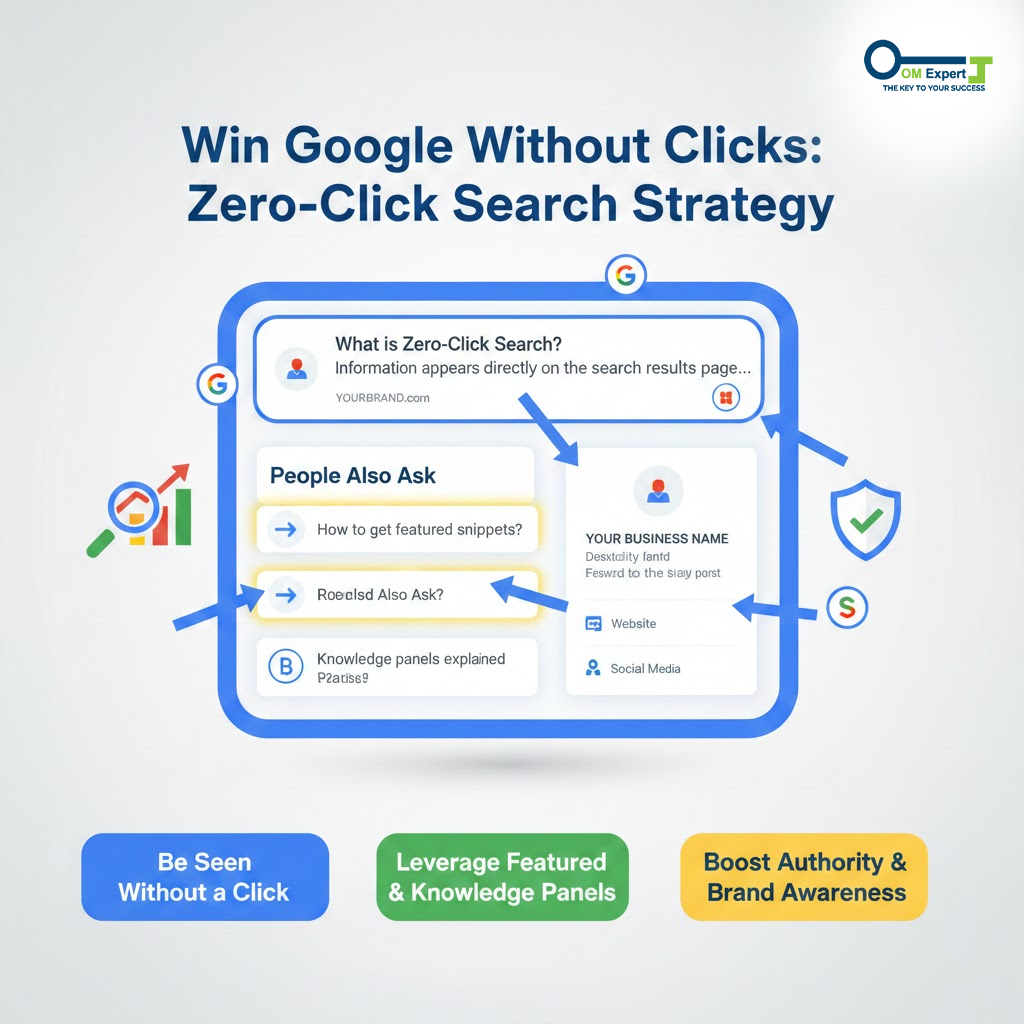
Search is changing fast. Many users now get their answers directly on Google without clicking on any website. You need a solid Zero-click search strategy if you want to be visible in this new setting. The method enables your brand to show up in search results from users who do not visit your website. Marketers who possess intelligence are currently developing methods to benefit from the changes instead of attempting to stop them.
Success with SEO used to be about obtaining as many clicks as you could. Google now frequently displays responses right on the results page. Users can get real-time information through People Also Ask boxes, maps, AI-generated summaries, feature snippets and knowledge panels. Businesses are forced to adapt their content strategies and implement a zero-click search approach that emphasizes visibility, authority and brand memory as a result of this change.
This article will explain what zero click search means, why it matters and how you can build a practical plan to win Google without depending only on website traffic.
What Is Zero-Click Search
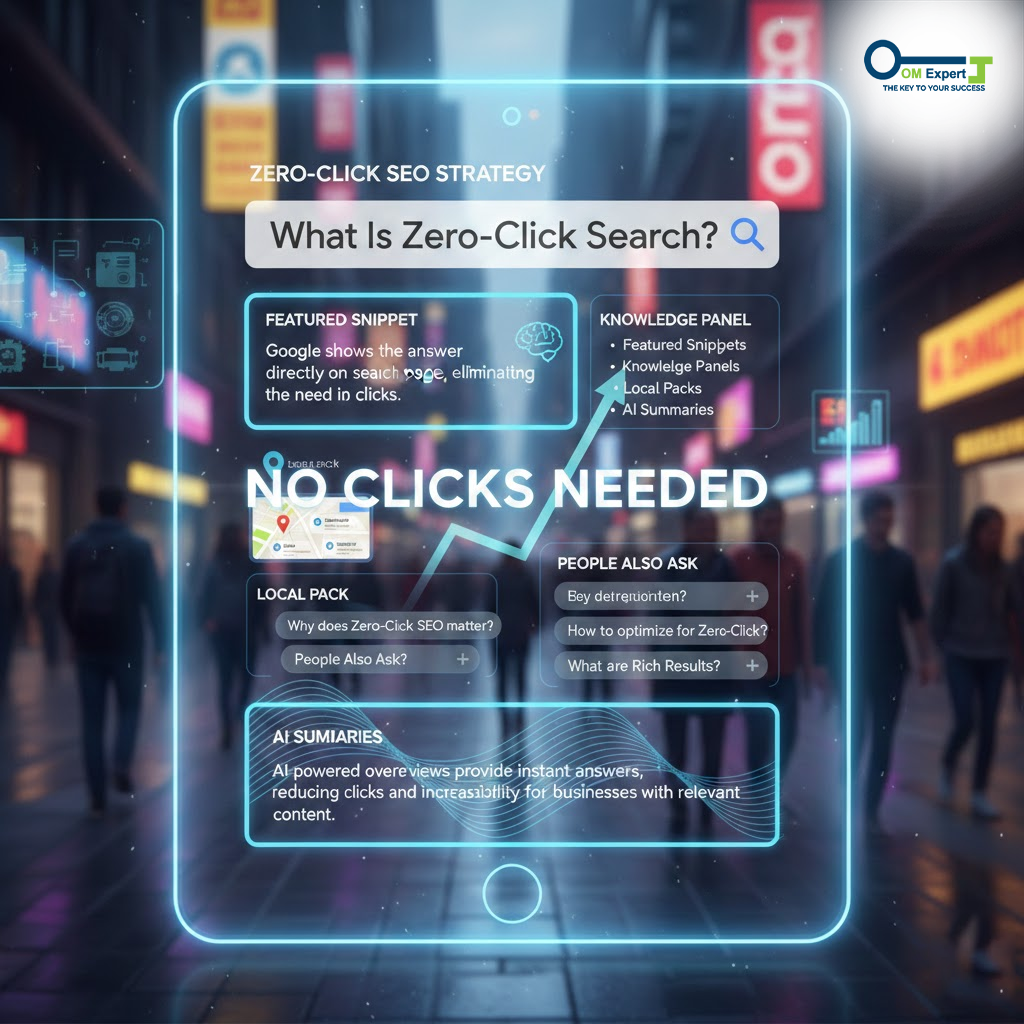
A zero-click search happens when a user types a query into Google and finds the answer directly on the search results page. They do not need to click on any website link. Google displays the answer in different formats, such as:
- Featured snippets
- Knowledge panels
- Local packs
- Image packs
- People Also Ask sections
- AI summaries
Google instantaneously displays the temperature when someone searches for the city’s weather, for instance. No click is required. If someone searches for a simple definition, Google often shows it at the top of the page.
This behavior is not a small trend. A large number of searches now end without a click. That is why businesses must rethink their SEO approach and build a zero-click search strategy that focuses on appearing inside those rich results.
Why Zero-Click Searches Are Growing
There are several reasons behind this shift.
- Users want quick answers. They prefer speed and convenience. Google understands this and tries to provide instant value.
- Mobile usage has increased. On mobile devices, users want fast information without opening multiple pages.
- AI integration in search results is expanding. Google now summarizes information from different sources and displays it clearly at the top.
It is dangerous to rely just on conventional blue link clicks due to these changes. Instead, brands should develop a zero-click search approach that ensures their content appears inside these rich results.
Does Zero Click Mean SEO Is Dead
Not at all. SEO is not dead. It is evolving.
Traffic may decrease for some keywords, but visibility and authority can increase if you adapt properly. Users notice your brand name when your content shows up in a People Also Ask box or featured snippet. They will remember you even if they don’t click right away.
This creates:
- Brand awareness
- Trust
- Authority
- Higher chances of future clicks
- Better conversion in the long run
The goal is no longer just traffic. The goal is influence. A strong zero-click search approach helps you become the trusted source in your niche.
The Real Goal of a Zero-Click Search Strategy
The real purpose of this strategy is simple. You want to become the answer.
Your content should show up in some way in the search results when someone looks up a query about your sector. It might be a definition, a list, a brief excerpt, or a graphic component.
Your focus should shift from chasing clicks to building presence. With a well-planned zero-click search strategy, you can:
- Own high-visibility spots
- Strengthen your brand authority
- Support voice search results
- Increase local discovery
- Improve trust signals
How to Build a Strong Foundation
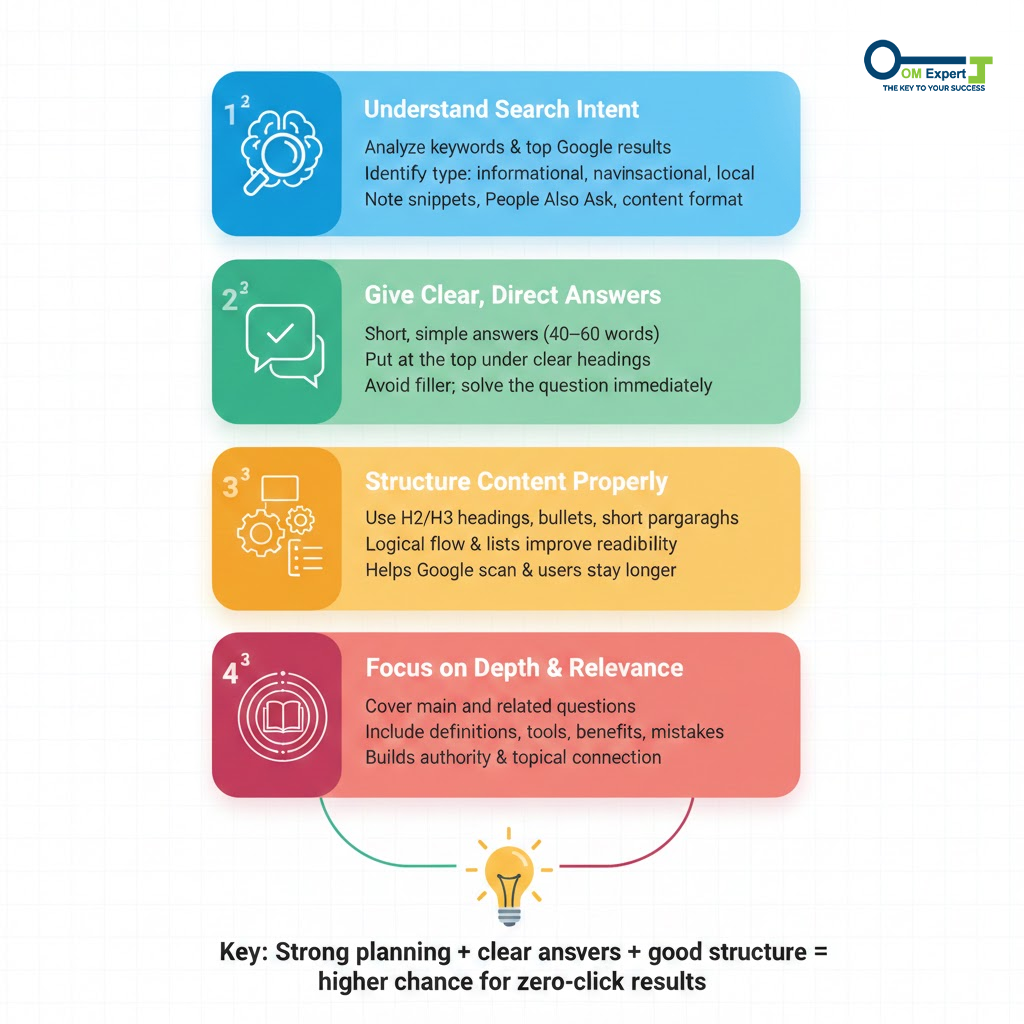
Only by making the most excellent foundations will you ever hope to achieve zero-click search results. Without a clear structure and clear purpose, even the best content will struggle to appear in rich results. A successful zero-click search approach always starts with planning, research and smart execution.
1. Understand Search Intent
Every query has an intent. There are four types of search intent, which include informational, navigational, transactional and local search. The current Google search results should be examined by you to Analyze your target keywords. It is clear that Google likes direct responses if the top results have snippets or People Also Ask boxes.
Go deeper than surface-level research. Type your keyword into Google and observe carefully.
- What type of content is ranking
- Are the top results blog posts, videos, or product pages
- Is Google showing definitions, lists, or step-by-step guides
- Are there related questions appearing
These clues help you understand what users really want. When your content matches intent clearly and directly, it has a higher chance of being selected for zero-click features.
2. Use Clear and Direct Answers
Google prefers content that is easy to extract. Write short, direct answers to common questions. Place them near the top of your article under clear headings.
For example, if your topic answers a definition, provide a simple 40 to 60-word explanation first. After that, expand with more details. This format helps both users and search engines.
Avoid complicated sentences. Avoid unnecessary filler words. Focus on clarity.
Think like this:
- Can someone understand this answer in one quick read
- Is the explanation simple enough for beginners
- Does it solve the question immediately
Clear writing improves your chances of appearing in snippets and People Also Ask results, which supports your Zero-click search approach.
3. Structure Your Content Properly
Use headings, subheadings, bullet points and short paragraphs. Google can better comprehend your page with clear formatting.
A well-structured article should include:
- One main title
- Clear H2 and H3 subheadings
- Short paragraphs with 3 to 4 lines
- Lists where needed
- Logical flow from one section to another
Search engines scan the structure before fully analyzing the meaning. It is more difficult to retrieve important information from an article that is disorganized or untidy.
Readable formatting also improves user experience. The longer a user stays on your page, the better it provides search engines with a good indication.
4. Focus on Topic Depth and Relevance
Surface-level content rarely wins zero-click positions. You must cover the topic completely. Answer primary questions and related sub-questions within the same article.
For example, if your topic is about SEO, also explain related terms, benefits, tools and common mistakes. This creates a strong topical connection and shows authority.
Google is more inclined to regard your material as a trustworthy source of information when it observes that your page covers a topic in detail.
These simple steps create the base for an effective zero-click search strategy.
Get Featured Snippet Optimization
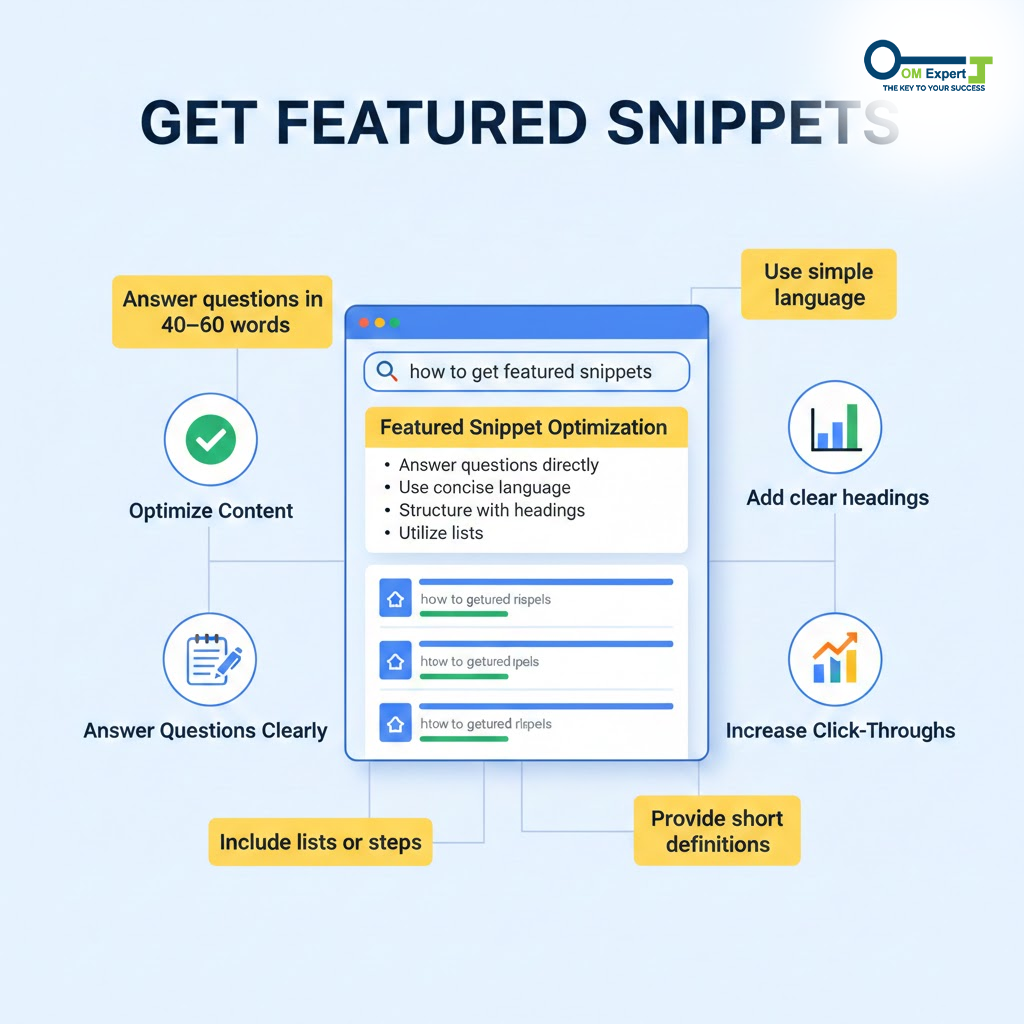
Featured snippets are powerful. They appear at the top of Google and provide a quick answer.
To optimize for snippets:
- Answer a question in 40 to 60 words
- Use simple language
- Add a clear heading above the answer
- Include lists or step-by-step instructions
- Provide definitions in a concise format
When Google trusts your content, it may select your page for the snippet position. This is a major win for your zero-click search strategy.
Focus on People Also Ask
The People Also Ask section shows related questions. These boxes expand when clicked and often display answers from websites.
To appear there:
- Research-related questions
- Add them as subheadings in your article
- Provide direct and useful answers
- Avoid unnecessary complexity
This approach increases your chances of being featured multiple times in search results.
Optimize for Local Zero-Click Results
If you run a local business, zero-click results can help you grow.
Local packs show maps, phone numbers, ratings and business hours. Many users call directly from this section without visiting the website.
To improve local visibility:
- Keep your business profile updated
- Add accurate contact details
- Collect real customer reviews
- Use location-based keywords
- Post updates regularly
Local optimization is an important part of a complete zero-click search strategy.
Use Structured Data
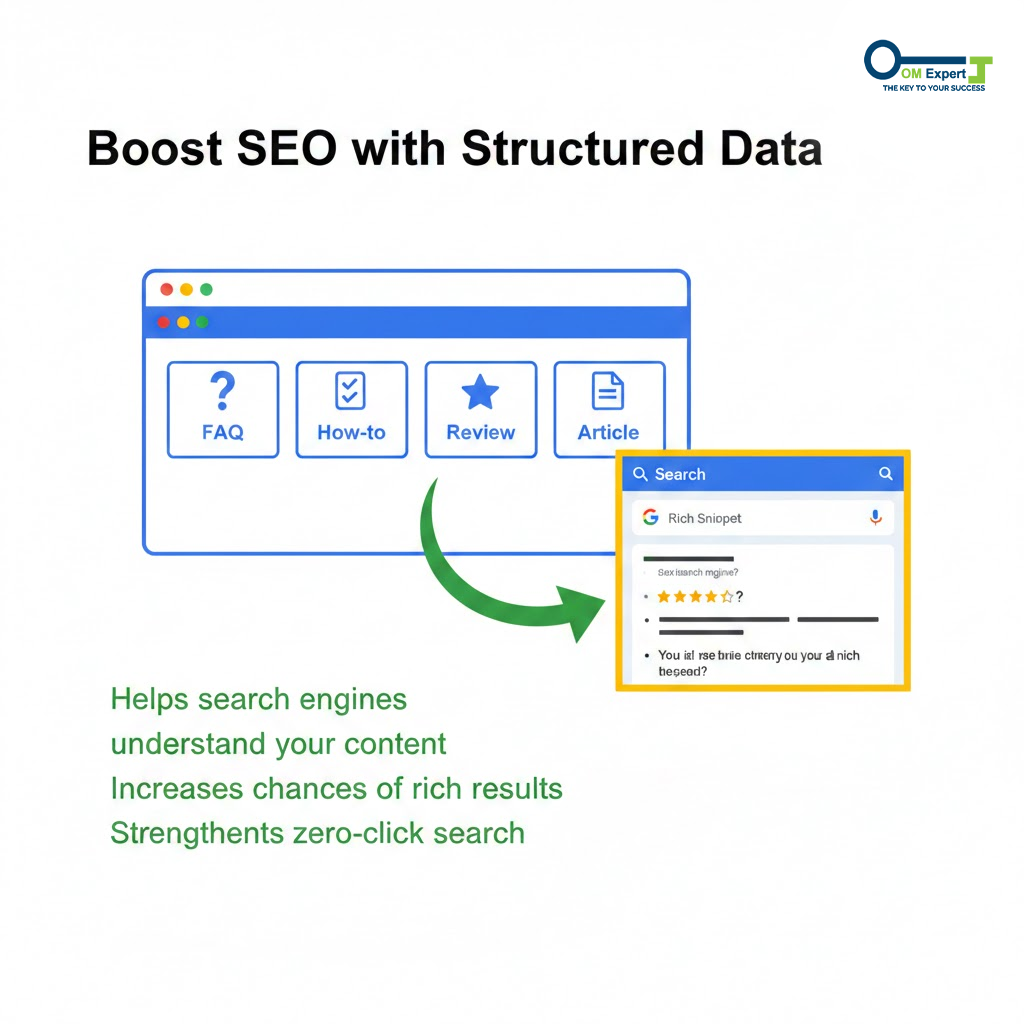
Structured data helps search engines understand your content better. It can improve your chances of appearing in rich results.
Examples of structured data include:
- FAQ schema
- How to schema
- Review schema
- Article schema
When search engines clearly understand your content type, they can display it in enhanced formats. This strengthens your zero-click search approach.
Create Content That Builds Authority
Artificial intelligence understands language in a human-like way. It does not only look at words. It looks at context.
Authority matters more than ever. Google prefers content from trusted sources.
To build authority:
- Publish well-researched articles
- Use credible references
- Keep content updated
- Maintain consistent quality
- Focus on one niche instead of random topics
When Google sees you as a reliable source, your chances of appearing in zero-click features increase.
Think About Voice Search
Voice assistants often read answers from featured snippets. When someone asks a question aloud, the assistant gives one clear answer.
If your content is optimized properly, it may become that answer.
To prepare for voice search:
- Use natural conversational language
- Answer specific questions
- Focus on long tail keywords
- Provide clear and short explanations
Voice search supports your zero-click search strategy by increasing exposure beyond traditional screen results.
Measure What Really Matters
Since clicks may not always increase, you must track different metrics.
Pay attention to:
- Impressions
- Average position
- Branded search growth
- Engagement from returning users
- Local calls and direct actions
Search Console functions as a tool that helps users monitor their website impressions. Your brand becomes more visible to people who see your website because your number of impressions increases.
Common Mistakes to Avoid
Many businesses misunderstand zero-click optimization. Avoid these errors:
- Writing overly long and confusing answers
- Ignoring search intent
- Keyword stuffing
- Copying competitor content
- Forgetting mobile optimization
A successful zero-click search approach requires clarity, structure and user value.
Balance Between Clicks and Visibility
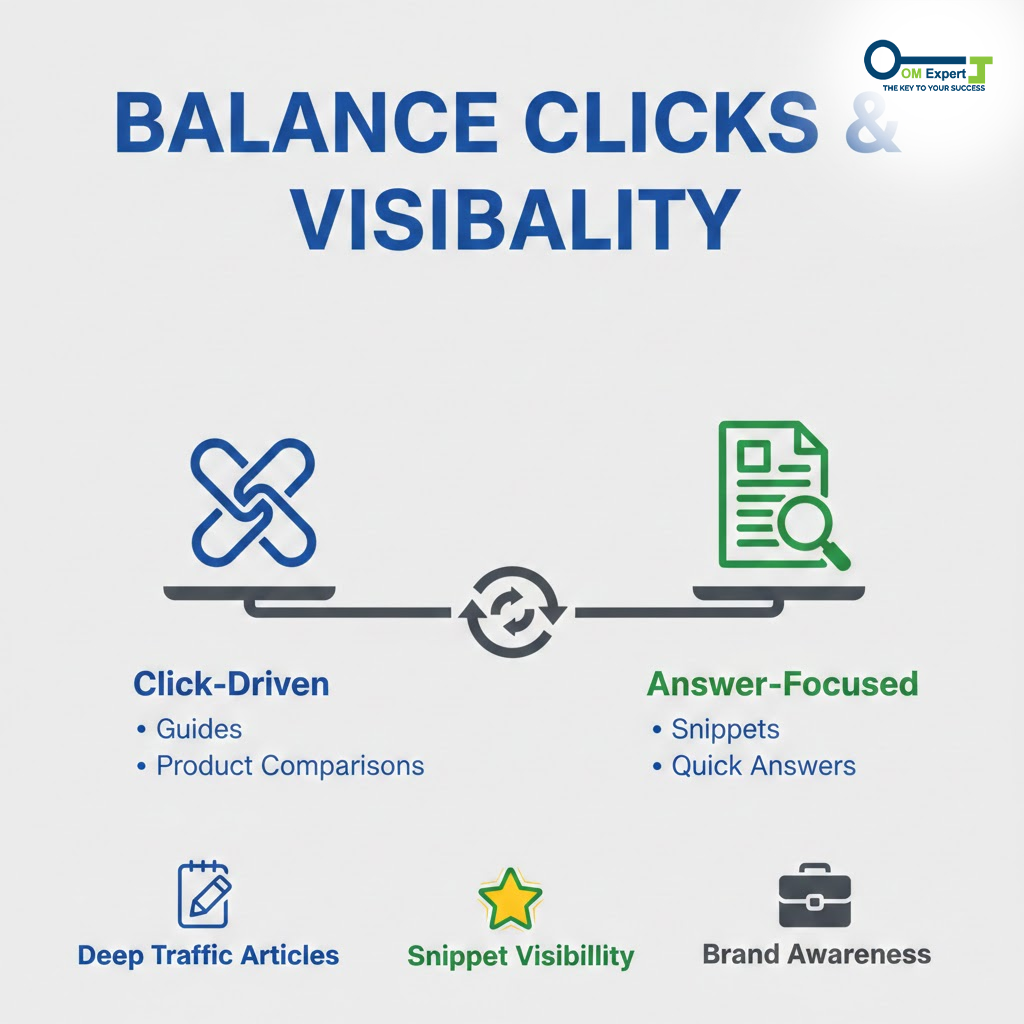
Zero-click optimization does not mean you should stop aiming for traffic. It means you should balance both goals.
Some keywords are still click-driven, especially detailed guides and product comparisons. Others are answer-focused.
Plan your content like this:
- Some articles target deep traffic
- Some target snippet visibility
- Some support brand awareness
This balanced approach keeps your overall SEO healthy and sustainable.
The Future of Search Belongs to Smart Brands
Search engines will continue evolving. AI summaries and instant answers will become more common. Businesses that resist change will struggle. Businesses that adapt will grow.
Instead of worrying about lost clicks, focus on owning the search space. Become visible in as many ways as possible.
A well-executed zero-click search strategy helps you stay relevant, trusted and competitive in this changing digital landscape.
Conclusion
Winning Google today is not only about traffic numbers. It is about presence, trust and authority. Long-term development is facilitated by the regular appearance of your brand in local packs, People Also Ask boxes and featured snippets. It also grows stronger when your brand consistently shows up in AI summaries across search results.
You can be successful even if consumers do not click on your website link if you comprehend search intent, effectively structure your content, optimize for snippets, concentrate on local visibility and track impressions.
You won’t just follow trends if you continuously put these principles into practice. You will lead them. For more practical digital marketing insights and strategies, you can explore helpful resources at OM Expert.
FAQ
1. Is a zero-click search strategy bad for website traffic?
Zero-click results may reduce some direct clicks, but they increase brand visibility and authority. A strong zero-click search strategy builds trust, leading to more branded searches and long-term growth.
2. How can beginners start with a zero-click search strategy?
Beginners should research common questions, write clear answers, use proper headings and match search intent. A simple, consistent zero-click search approach works better than complicated SEO tactics.
3. Does a zero-click search approach work for small businesses?
Yes, it helps small businesses appear in local packs and answer boxes. A well-planned zero-click search strategy increases visibility, calls and inquiries without depending only on website traffic.
4. How long does it take to see results from a zero-click search strategy?
Results depend on competition and content quality. With consistent optimization and helpful content, a zero-click search approach can improve impressions and visibility within a few weeks or months.
5. Is a zero-click search strategy important in the AI search era?
Yes, AI-powered results show direct summaries. A strong zero-click search approach improves your chances of appearing in those summaries, keeping your brand visible as search technology evolves.