
What Is AI Keyword Clustering tool and Why It Matters for SEO

Search engine optimization is not the same as it was a few years ago. Websites used to be able to rank by concentrating on and repeatedly employing a single keyword per page. Users want better results these days, and search engines are more intelligent. Google now understands the meaning, context and intent behind searches. This change necessitates a change in SEO tactics. This is where an AI keyword clustering tool becomes important for anyone who wants stable and long-term organic traffic.
Hundreds or even thousands of articles are published by many website owners, but they still don’t rank highly. One major reason behind this problem is poor keyword planning. When similar keywords are scattered across multiple pages, search engines get confused. Keyword clustering helps solve this issue by organizing keywords in a clear and logical way.
You will discover the definition of keyword clustering, how artificial intelligence enhances it and why it is essential to contemporary SEO success in this blog.
Understanding Keyword Clustering
Keyword clustering means grouping similar keywords together based first on their shared meanings and their search intents. You target a collection of related keywords with a single powerful page rather than making distinct pages for each keyword variation.
For example, users may search using different phrases but want the same information. These keywords belong to one cluster and should be covered in one article.
Keyword clustering does not reduce your keyword reach. Instead, it increases your chances of ranking by making content more focused and helpful.
What Is an AI Keyword Clustering Tool
An AI keyword clustering tool is a software solution that automatically groups keywords using artificial intelligence. It analyzes keyword meaning, search intent and search engine result pages to create accurate clusters.
Unlike manual keyword grouping, AI-based tools do not rely on guessing. They study how search engines rank content and how users search. This results in better keyword organization and improved SEO planning.
Such a tool helps you understand which keywords belong on the same page and which ones need separate content.
How Artificial Intelligence Improves Keyword Clustering

Artificial intelligence understands language in a human-like way. It does not only look at words. It looks at context.
AI improves clustering by:
- Understanding similar meanings
- Identifying user intent
- Analyzing search results
- Detecting topic relationships
Artificial intelligence-generated keyword clusters are, therefore, more precise and useful for SEO.
Content relevancy is increased and errors are decreased when using an AI keyword clustering tool.
Why Traditional Keyword Research Is Not Enough Anymore
Conventional keyword research emphasizes keyword difficulty and search volume. These measures are still helpful but they don’t provide the whole picture.
Problems with traditional methods include:
- Creating many similar articles
- Keyword cannibalization
- Poor content structure
- Confusing internal links
Search engines now prefer content that covers a topic fully rather than repeating similar information across multiple pages. Keyword clustering supports this new SEO approach.
How an AI Keyword Clustering Tool Works Step by Step
The process of using keyword clustering tools is simple.
- You collect keywords from any keyword research source.
- You upload the list into the tool.
- The tool analyzes keywords using AI.
- It creates keyword clusters based on intent and relevance.
Each cluster represents one topic. You then create one page for each cluster.
This process becomes faster and more reliable with an AI keyword clustering tool, especially when dealing with large keyword lists.
Why Keyword Clustering Matters for Modern SEO
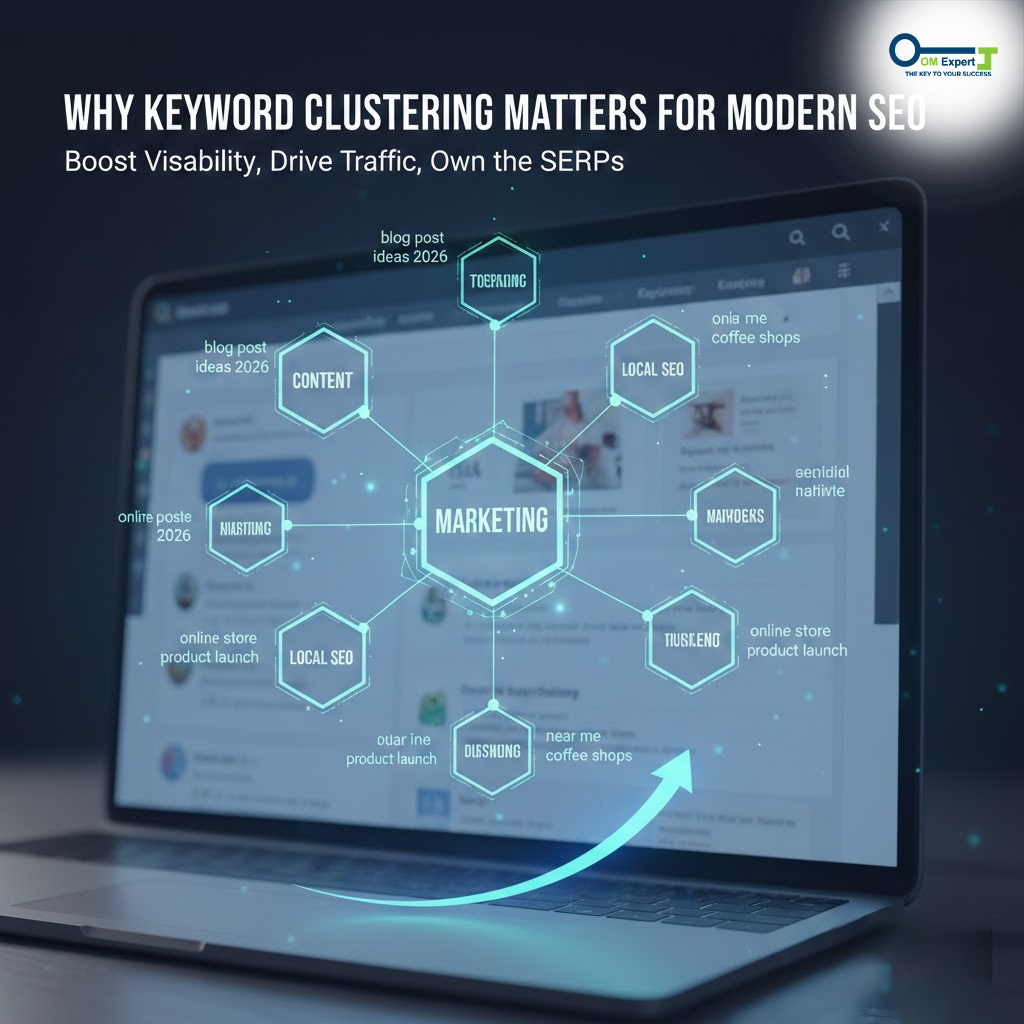
Search engines aim to deliver the best possible answer to users. You can achieve this objective through keyword clustering, which helps you create content that focuses on complete topics instead of single keywords. The presence of relevant keywords throughout a webpage enables search engines to determine the main topic of the content.
You produce fewer but more comprehensive pages rather than a large number of short pieces that restate the same content. The method decreases search engine confusion because it stops your web pages from competing with each other. The system enables users to access all required information from a single location.
Modern SEO requires three essential elements, which include clear content and relevant material and extensive information. The implementation of keyword clustering enables organizations to achieve three objectives through its capacity to enhance content organization and match user search needs while developing comprehensive subject treatment. The result of this process improves page rankings and enables websites to deliver better user experiences.
Building Topical Authority Through Keyword Clustering
Topical authority means covering a subject thoroughly. Search engines view a website as reliable when it provides answers to all of the pertinent queries regarding a subject.
By using keyword clustering, you can:
- Cover all subtopics
- Address related questions
- Create structured content
You can plan topic-based content that gradually increases authority by using an AI keyword clustering tool.
Avoiding Keyword Cannibalization With Proper Clustering
Keyword cannibalization occurs when multiple pages target similar keywords. This confuses search engines and weakens rankings.
One keyword group is assigned to one page when keyword clustering is done correctly. Every page has a distinct goal and focus.
This results in:
- Stronger rankings
- Better crawl efficiency
- Clear website structure
How Keyword Clustering Improves Content Quality
Good keyword clustering enhances content naturally. You cover all important points in one place instead of repeating similar ideas across pages.
Benefits include:
- Better user engagement
- Longer time spent on page
- Higher trust
An AI keyword clustering tool guides writers on what topics and subtopics to include, improving overall content quality.
Saving Time and Effort With AI-Based Clustering
Manual keyword clustering takes time and often leads to mistakes. AI tools automate this process and save hours of work.
This allows you to:
- Focus on writing
- Improve user experience
- Scale content production
Using an AI keyword clustering tool greatly boosts productivity for bloggers and agencies.
Who Should Use Keyword Clustering Tools
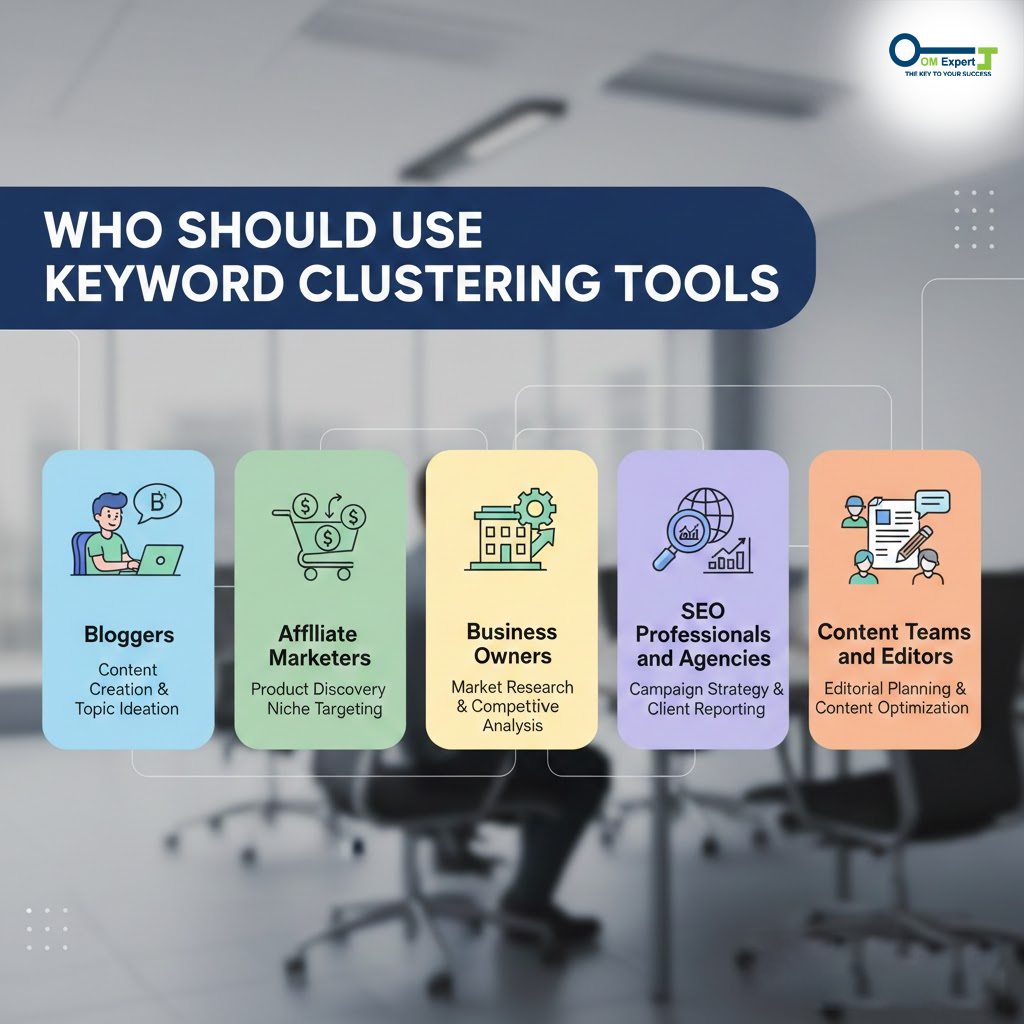
Keyword clustering benefits many types of users because it brings clarity, structure and focus to SEO planning. Anyone who creates content for search engines can benefit from grouping keywords properly. Content is more manageable and efficient when keywords are arranged according to topic and intent.
Bloggers
Bloggers often publish content regularly, which increases the risk of writing on similar topics again and again. It is simple to write several articles that focus on nearly identical keywords if keyword clustering is not used. This leads to duplicate content issues and weak rankings.
Keyword clustering helps bloggers plan content more clearly. They can write one solid, in-depth piece that covers the subject thoroughly instead of creating multiple brief articles that cover related topics. The process results in time savings and enhanced content quality while assisting blogs to achieve multiple keyword rankings through their single webpage. The strategy assists bloggers in boosting their website traffic while establishing their professional expertise through the creation of content.
Affiliate Marketers
Affiliate marketers depend heavily on search traffic and buyer intent keywords. Affiliate sites frequently have thin review pages that are difficult to rank if keywords are not organized effectively.
Keyword clustering allows affiliate marketers to group buyer-focused keywords such as comparisons, reviews and alternatives into clear content plans. This helps create pages that answer all buyer questions in one place. Pages become more helpful, rank higher, and convert visitors more successfully as a result. Affiliate marketers can also steer clear of keyword cannibalization, which is prevalent on big affiliate websites, by using an AI keyword clustering tool.
Business Owners
Business owners usually focus on services or products rather than content creation. SEO is still crucial for drawing clients, though. Many business websites suffer because service pages are not optimized properly and keywords are spread randomly across pages.
Keyword clustering helps business owners organize keywords based on services, locations and user intent. This results in clear and focused service pages that are easy for users and search engines to understand. Lead generation, rankings, and trust are all enhanced by well-structured sites. Business owners can also avoid unnecessary blog posts and focus on content that supports their core services.
SEO Professionals and Agencies
SEO professionals work with large keyword datasets and multiple websites. Manual keyword grouping becomes difficult and time-consuming at this level. Mistakes can also affect client results.
Keyword clustering tools help SEO professionals manage large projects efficiently. They can quickly organize thousands of keywords, plan content strategies and build clear site structures. This leads to better results for clients and saves valuable time. An AI keyword clustering tool supports data-driven decisions and helps SEO teams scale their work without losing accuracy.
Content Teams and Editors
Content teams and editors also benefit from keyword clustering. It helps them understand what content to assign, how articles connect and which topics are already covered. This reduces confusion and improves collaboration.
In all cases, keyword clustering supports better planning, stronger content and smarter SEO decisions. Everyone who creates material works more confidently and clearly when keywords are arranged correctly.
Common Keyword Clustering Mistakes to Avoid
Even good tools can fail if used incorrectly.
Avoid these mistakes:
- Creating multiple pages for one cluster
- Ignoring search intent
- Using keywords unnaturally
- Publishing thin content
- Skipping internal links
Keyword clustering works best when combined with strong writing and SEO basics.
How Keyword Clustering Supports Internal Linking
Keyword clusters create a natural content hierarchy. Related pages can link to each other logically.
Internal linking helps:
- Search engines understand topic relationships
- Users navigate content easily
- Pages pass link value
An AI keyword clustering tool makes internal linking planning more structured.
Is Using AI for Keyword Clustering Safe for SEO
Yes, using AI for keyword clustering is safe when it is done correctly. Search engines do not penalize the use of AI tools. They focus on content quality and user value. AI keyword clustering helps organize keywords in a logical way, which improves content structure and clarity.
These tools support better planning by grouping keywords with the same intent. This makes it easier to create focused and helpful pages. The material complies with search engine criteria as long as it is written for actual users and appropriately responds to their queries.
Problems only occur when the content is low quality or created only for rankings. When AI clustering is used responsibly, it supports long-term SEO growth and improves overall website performance.
The Future of SEO Lies in Topic-Based Optimization

SEO is shifting away from single keyword targeting. Topic-based optimization is becoming the standard.
Search engines prefer:
- Clear topics
- Helpful answers
- Well-structured content
Websites are better prepared for long-term growth and algorithm upgrades when they use an AI keyword clustering tool.
Final Conclusion
Keyword clustering is no longer optional for SEO success. It helps organize content, prevent ranking issues and build topical authority. You make pages that are more intelligent and targeted rather than producing more content.
Keyword clustering enhances search engine visibility and user experience when done properly. It allows websites to grow steadily without confusion or wasted effort.
At OM Expert, applying smart SEO practices like keyword clustering can help websites achieve sustainable growth and a stronger online presence.
FAQs
1. What is an AI keyword clustering tool?
An AI keyword clustering tool automatically groups related keywords based on meaning, search intent and how Google ranks pages. It helps organize keywords, plan topics and create content that targets multiple related searches on one page.
2. How does keyword clustering help improve SEO?
Keyword clustering improves SEO through the creation of dedicated topic-based pages, which replace multiple unconnected posts. This method prevents keyword cannibalization while enhancing content relevance and assisting search engines with website understanding.
3. Can bloggers and small companies profit from it?
Yes. Bloggers and small businesses can use keyword clustering to plan content, avoid duplicate articles and cover topics thoroughly. This saves time and improves organic traffic without creating unnecessary pages.
4. Is using AI for keyword clustering safe?
The AI keyword clustering tools provide organizations with a proper method to arrange their keywords into groups. Google only imposes penalties on content that does not meet quality standards and content that is considered spam. The tools enable users to maintain their online presence through sustainable SEO development, which leads to improved search engine results.