
The Ultimate Guide to Perplexity AI Optimization Strategy
The field of artificial intelligence (AI) is quickly revolutionizing how data, decision-making and automation are performed by businesses, researchers, and engineers. AI models have become ubiquitous, helping improve the customer experience, generate more accurate predictive models, and more. But to unlock the full potential of AI, a key challenge lies in effectively optimizing the underlying AI models. A Perplexity AI optimization strategy method, for instance.
In this guide, we will walk you through AI efficiency hacks, real-world AI Optimization tips, and how to build a powerful AI Strategy Blog. Whether you are dealing with a neural network, an LLM, or Reinforcement Learning, the techniques explained below will enable you to achieve AI Performance improvements, model accuracy improvement, and AI workflow optimization.
Why Perplexity Matters in AI: -
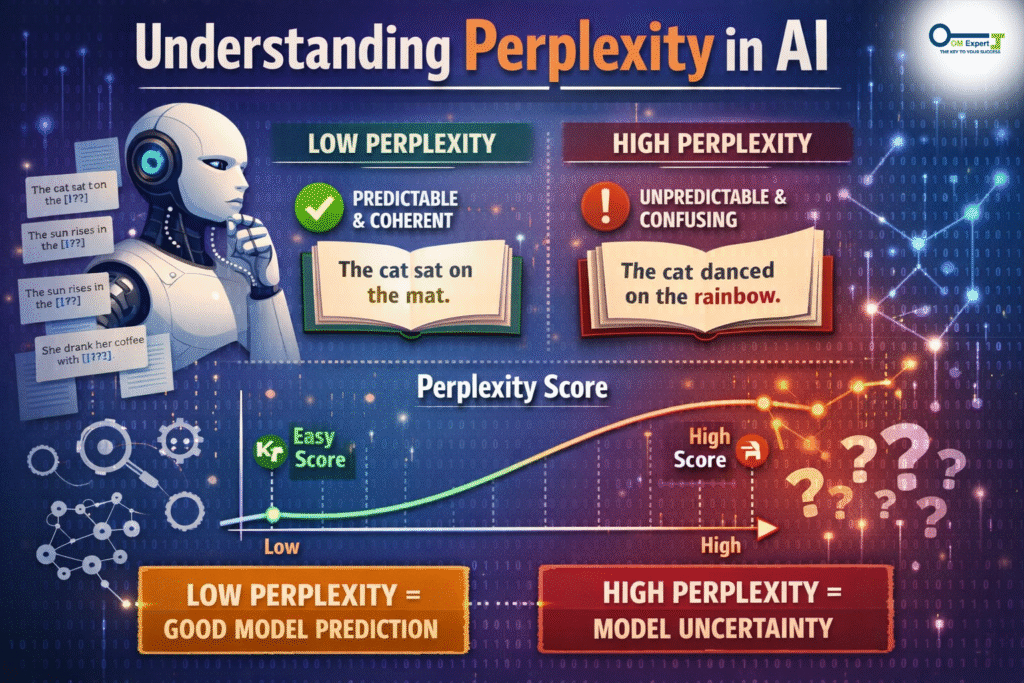
Perplexity is a metric for how well a language model is performing. Essentially, it‘s a measure of how surprised the AI is at the next word that it should be outputting. The lower the perplexity, the better the AI is doing. And knowledge about perplexity is essential for those of you aiming to get the best performance out of AI systems.
You‘ll be looking to improve text generation optimisation, context modeling AI and how you make AI decisions! From text generation to text analytics and predictive analytics, optimizing with Perplexity AI for any AI use case will help you deliver consistent, valuable, and relevant insights.
Understanding Perplexity in AI
What is Perplexity?
Perplexity is a measure of uncertainty. In the context of NLP optimization, it quantifies how surprised a language model is upon encountering new data. Simply put, if your AI consistently predicts the next word in a sentence accurately, it has low perplexity.
For instance, consider the sentence: “The cat sat on the mat.” If the AI predicts each word correctly based on context, it demonstrates a low perplexity score. High perplexity, on the other hand, indicates that the model is struggling to understand context, resulting in incoherent or irrelevant outputs.
Why Perplexity AI Optimization Strategy Matters:
Focusing on perplexity has multiple benefits:
- Improving AI performance for text generation – AI can produce human-like content more reliably.
- Enhancing context modeling AI capabilities – The AI better understands semantic relationships between words.
- Strengthening AI decision-making tips – Models can make predictions and recommendations with higher confidence.
By optimizing for perplexity, businesses can develop AI models that are not only efficient but also capable of handling complex tasks such as semantic search, query understanding, and AI knowledge graphs.
Key Strategies for Perplexity AI Optimization
AI Model Tuning and Hyperparameter Tips
Hyperparameter tuning is one of the most critical steps in AI optimization. Hyperparameters, such as learning rate, batch size, optimizer choice, and the number of layers, directly affect model performance. Proper tuning can dramatically reduce perplexity and improve output quality.
Practical steps for AI model tuning:
- Experiment with neural network optimization strategies, including dropout, weight decay, and batch normalization.
- Automate AI workflow optimization using tools like AutoML or grid search to find optimal parameters efficiently.
- Track AI performance metrics, including accuracy, F1 scores, and perplexity, to measure the effectiveness of tuning.
By carefully managing these factors, you can achieve model accuracy improvement and create AI systems that are robust and adaptable.
Prompt Optimization and Context Modeling
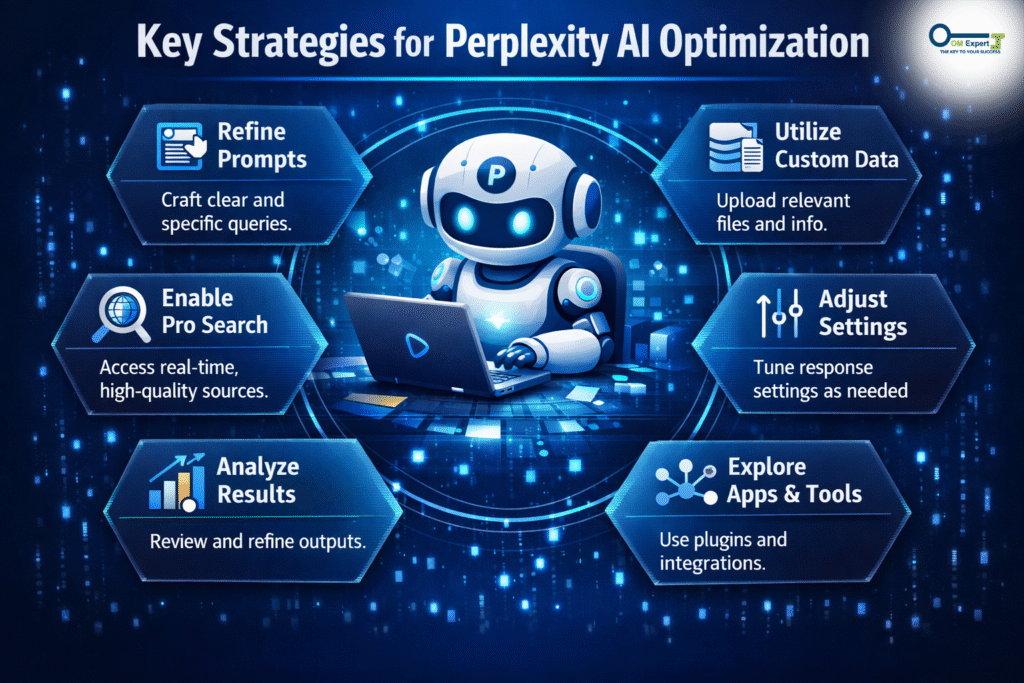
A well-structured prompt can make a huge difference in the performance of large language models. The prompt optimization guide focuses on designing queries or instructions that produce the most accurate responses.
Tips for prompt optimization:
- Provide clear and concise instructions. Ambiguous prompts often confuse AI models.
- Include contextual information to guide the AI’s reasoning. For example, specifying tone, style, or subject improves results.
- Test multiple prompt variations and compare outputs to identify the most effective strategy.
Optimized prompts enhance text generation optimization, ensure better query understanding AI, and reduce errors in content production.
Reinforcement Learning and Adaptive Learning Tips
Reinforcement learning (RL) allows AI models to learn from experience. This approach uses reward-based signals to iteratively improve predictions. Incorporating RL with adaptive learning tips enables AI to adjust to new data dynamically.
Best practices for reinforcement learning:
- Continuously refine AI predictions using feedback loops.
- Combine RL with predictive modeling blogs’ insights to develop smarter decision-making systems.
- Optimize training cycles to maximize efficiency, using AI training tips like experience replay and reward shaping.
This method ensures that AI models evolve over time, improving AI efficiency strategies, and can handle complex, changing environments.
Scaling, Deployment, and Efficiency
Scaling AI systems requires strategic planning. The goal is to expand AI capabilities while maintaining efficiency. Applying AI scaling tips and AI deployment tips can help businesses handle larger datasets and more complex models.
Key strategies include:
- Leveraging cloud infrastructure and distributed computing for large language model guides.
- Monitoring AI performance metrics post-deployment to ensure consistency.
- Minimizing computational costs with AI efficiency strategies, such as model pruning and quantization.
Proper scaling ensures that your AI system remains fast, reliable, and capable of serving real-world applications without sacrificing accuracy.
Advanced Techniques – Knowledge Graphs and Semantic Search
Modern AI optimization goes beyond model tuning. Integrating AI knowledge graphs and semantic search tips can elevate AI performance for advanced tasks.
Implementation strategies:
- Build knowledge graphs to represent relationships between entities, aiding context modeling AI.
- Use semantic search techniques to improve query understanding AI, ensuring accurate and context-aware results.
- Employ AI benchmarking guides to evaluate system performance against industry standards.
These approaches allow AI models to handle complex information retrieval tasks and provide deeper insights from structured and unstructured data.
Measuring and Monitoring AI Performance
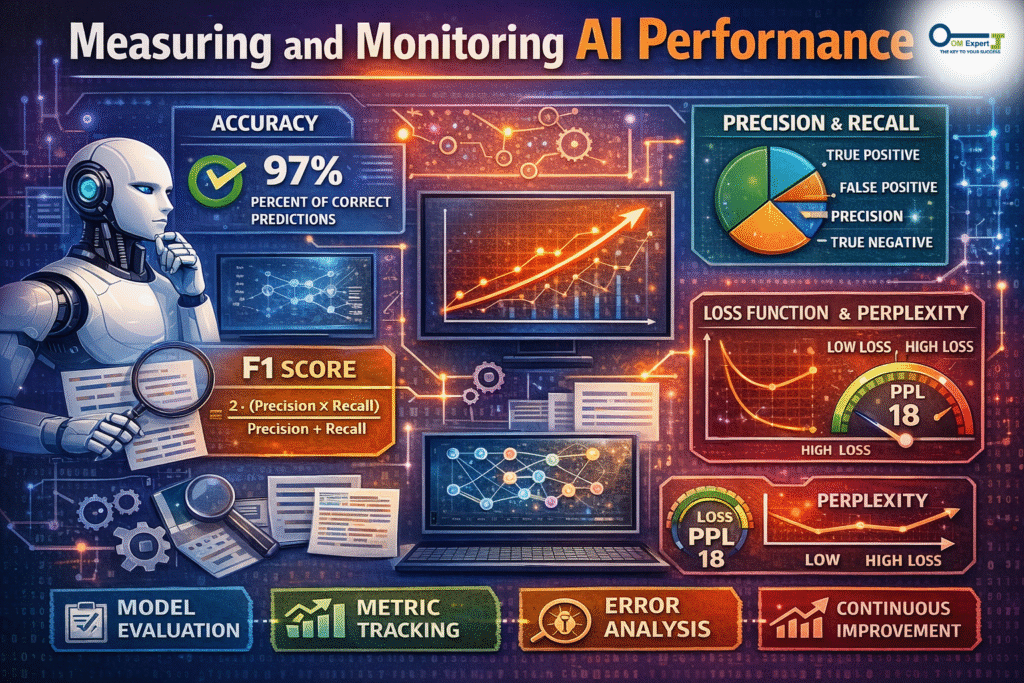
Continuous monitoring is crucial for sustaining AI optimization and ensuring that models maintain high performance over time. By using the right AI performance metrics, organizations can quickly identify areas of improvement, refine their systems, and make data-driven adjustments. Regular evaluation not only improves model accuracy but also supports long-term efficiency and reliability in AI workflows.
Essential metrics include:
- Model accuracy and error rates – Assess overall correctness and detect areas where the AI may produce incorrect or inconsistent outputs, helping guide targeted model improvements.
- Perplexity scores – Measure prediction quality in language models, indicating how well the AI understands context and generates coherent, relevant text. Lower perplexity corresponds to more accurate and human-like predictions.
- Response time and efficiency – Evaluate how quickly the AI processes tasks and delivers outputs, which is critical for real-time applications such as chatbots, recommendation engines, or predictive analytics.
- Adaptability in new scenarios – Test how AI handles unfamiliar inputs or changing datasets, ensuring models remain robust and flexible in dynamic environments.
By consistently monitoring these metrics, organizations can align with AI innovation strategies, maintain competitive performance, and implement a Perplexity AI optimization strategy that evolves with emerging challenges and business needs.
Integrating AI Optimization into Business Workflows
Optimized AI models can revolutionize business operations:
- Customer Support – Automated chatbots and virtual assistants benefit from prompt optimization guides to deliver accurate responses.
- Content Generation – Media and marketing teams can use text generation optimization to produce high-quality content efficiently.
- Predictive Analytics – Using reinforcement learning blogs and predictive modeling blogs, businesses can forecast trends and customer behaviors.
- Search and Knowledge Management – Integrating AI knowledge graphs and semantic search tips enhances internal search and data retrieval.
By embedding AI optimization practices into workflows, organizations can reduce costs, improve productivity, and deliver better results.
Real-World Applications of Perplexity AI Optimization Strategy
Customer Service Optimization:
- AI chatbots with low perplexity better understand queries.
- Provide natural, context-aware responses.
- Reduce response times and improve user satisfaction.
Content Generation:
- AI produces coherent articles, social media posts, and product descriptions.
- Reduces human effort and speeds up workflow.
- Ensures consistency in tone and style.
Predictive Analytics:
- Optimized AI models forecast trends and detect anomalies accurately.
- Supports data-driven decision-making with higher confidence.
- Enhances efficiency in business strategy planning.
Semantic Search and Knowledge Management:
- AI understands user intent more effectively.
- Retrieves relevant information quickly.
- Improves internal productivity and search accuracy.
Industry Applications:
- Healthcare: More accurate diagnostics and treatment recommendations.
- Finance: Fraud detection and risk assessment improvement.
- E-commerce: Personalized recommendations and better inventory forecasting.
Business Impact:
- AI becomes a dynamic, high-performing asset.
- Minimizes errors and adapts to new data efficiently.
- Drives innovation and delivers measurable business value.
Future Trends in AI Optimization
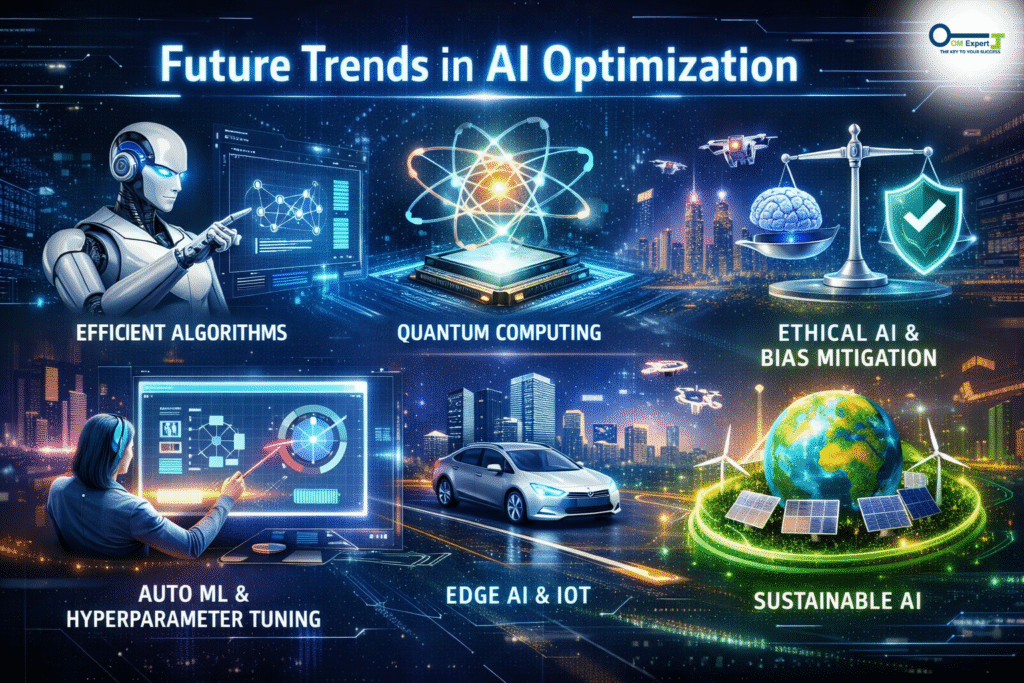
The field of AI is rapidly evolving. Future trends in Perplexity AI optimization strategy include:
- Explainable AI (XAI) – Emphasizing AI interpretability tips to understand model decisions, ensuring transparency and building trust in AI outputs. This approach allows developers and stakeholders to see why models make specific predictions, which is essential for improving optimization and compliance in critical applications.
- Adaptive learning models – AI systems that continuously evolve with minimal supervision, learning from new data and adjusting their behavior automatically. These models maintain high performance even as environments change, reducing the need for constant manual retraining and enhancing overall AI efficiency strategies.
- AI-driven automation – Advanced models capable of independent decision-making, streamlining workflows, and reducing human intervention in repetitive or complex tasks. Automation enables faster deployment of AI solutions while maintaining accuracy and reliability.
- Cross-domain optimization – Integrating multiple AI models for comprehensive solutions, enhancing machine learning blog insights, and providing deeper analysis across diverse datasets. This allows organizations to leverage AI more strategically across different functions and domains.
These developments highlight the importance of staying up to date with AI research tips and applying advanced AI project optimization strategies to ensure robust, efficient, and future-ready systems.
Conclusion
Optimizing AI effectively requires a comprehensive and holistic approach that goes beyond simply training a model. It involves combining deep learning techniques, AI model tuning, prompt engineering, and advanced optimization methods such as knowledge graphs and semantic search. By integrating these strategies, organizations can significantly enhance AI performance metrics, reduce perplexity, and improve overall model accuracy. This not only strengthens predictive modeling and context-aware reasoning but also ensures AI systems operate efficiently across diverse applications and datasets.
For businesses, developers, and AI enthusiasts looking to stay ahead, implementing a well-structured Perplexity AI optimization strategy is crucial. Leveraging expert guidance from resources like OM Expert provides practical insights, step-by-step frameworks, and real-world best practices to optimize AI workflows. These strategies help organizations deploy AI systems that are robust, adaptable, and capable of delivering measurable results, ranging from automated content generation and predictive analytics to enhanced decision-making and intelligent search.
FAQs
What does Perplexity AI optimization strategy mean?
It’s a method to improve AI models’ prediction accuracy by lowering perplexity and enhancing text coherence.
Why should I focus on perplexity in AI?
Because low perplexity ensures AI produces reliable, human-like content and better decision-making outputs.
How do I implement the Perplexity AI optimization strategy?
Through hyperparameter tuning, prompt engineering, reinforcement learning, and advanced AI techniques.
Which AI models need this strategy most?
Large language models, neural networks, and adaptive AI systems benefit the most.
How does it improve AI performance for businesses?
It boosts content generation, customer support, predictive analytics, and semantic search accuracy.
How can I track success after optimization?
By monitoring metrics like perplexity scores, accuracy, response time, and adaptability to new data.