
The Future of Content: Real-Time Dynamic Content Generation Explained
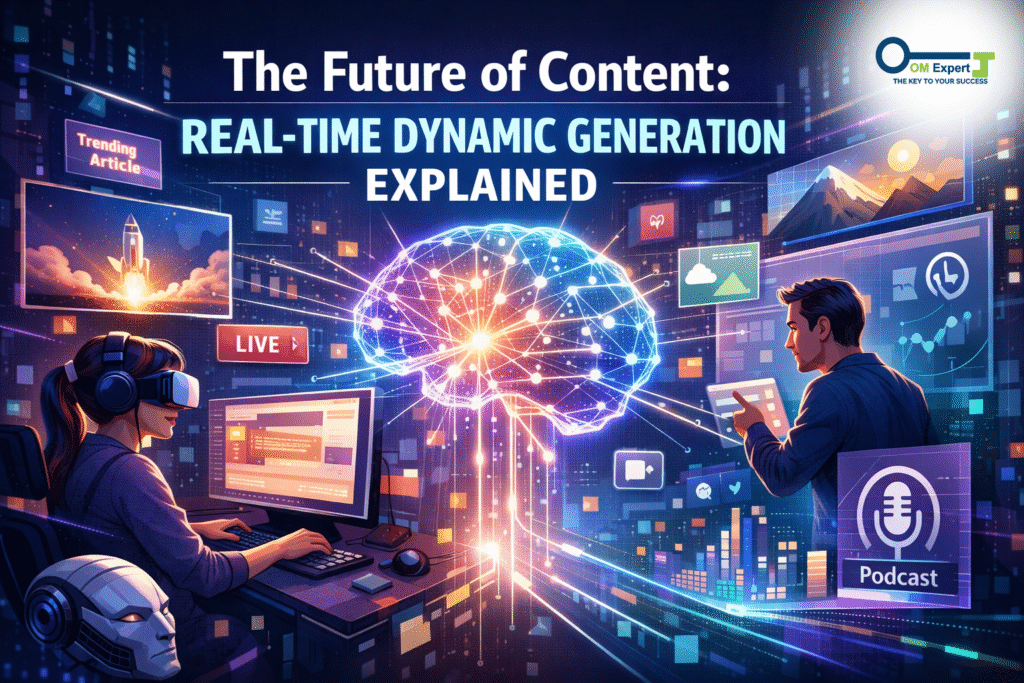
The internet has changed the way we live, learn, shop and connect. Websites used to be simple and basic. You opened a page, read the information and left. Everyone saw the same thing. There was no change, no adaptation, and no personal touch. Things are very different now. Content is no longer fixed. It moves, reacts and updates in seconds. It adjusts based on who you are, where you are, what you like, and how you behave online. This powerful shift is called real-time dynamic content generation.
In simple words, it means creating and updating digital content instantly using live data. Systems now properly react to each user, rather than displaying the same message to everyone. This strategy boosts performance, creates trust and enhances engagement. This in-depth guide will go over how real-time content works, the technology that powers it, why it is important for companies, and how it will impact digital marketing and online experiences in the future.
Understanding Real-Time Dynamic Content Generation: -
At its heart, real-time dynamic content generation is about delivering the right content at the right moment. It uses data, automation, and intelligent systems to instantly update websites, apps, and platforms. Unlike traditional content publishing, which requires manual updates, real-time systems operate automatically. They respond to user signals such as clicks, searches, location, time of day & browsing patterns.
For example, when a user visits an online store, the homepage may instantly adjust to show products related to their past searches. That adjustment happens in seconds. This is powered by AI content generation, which helps produce and modify text recommendations and visuals without manual effort. These systems also depend on machine learning content creation to improve performance over time. Machine learning models analyze user patterns and learn from them. The more users interact, the smarter the system becomes.
Key Features of Real-Time Systems
- Instant content updates
- Personalized user experiences
- Automated decision-making
- Continuous improvement through data
This results in flexible and responsive dynamic web content that feels relevant and modern.
The Technology Behind the Change: -
Real-time dynamic content generation does not appear magically. It is built on strong technological foundations that work together smoothly.
Intelligent Algorithms and Automation
Modern digital platforms rely heavily on algorithmic content generation. Algorithms analyze user behavior and make quick decisions about what content to display. These decisions are based on patterns found in large amounts of data. At the same time, platforms use real-time data-driven content strategies. Instead of guessing what users want, systems rely on live information. This approach reduces waste and improves efficiency.
Automation plays a big role. Through automated content personalization, websites can change headlines, banners, and calls-to-action for different visitors. This creates stronger engagement. These adjustments are part of larger adaptive content systems that evolve continuously. They do not remain static. They grow smarter with each interaction.
Predictive and Context-Aware Intelligence
Modern systems do more than react. They predict. Using predictive content delivery, platforms can anticipate what a user may need next. For instance, if someone reads several articles about digital advertising, the system may suggest advanced marketing guides automatically.
Meanwhile, context-aware content ensures the message fits the situation. A mobile user may see shorter text and larger buttons, while a desktop user may see detailed visuals. This level of intelligence creates smoother and more satisfying digital journeys.
Infrastructure That Supports Real-Time Content: -
Behind every fast-loading page is strong technical support. Real-time systems require speed, stability, and secure data flow.
Server and Rendering Technologies
Many platforms rely on server-side content generation, where content is processed before reaching the user’s browser. This improves speed and security. At the same time, dynamic webpage rendering allows pages to change without full reloads. This keeps the user experience smooth. With front-end content updates, visible elements can shift instantly when a user clicks or scrolls. These updates feel seamless.
Advanced Delivery Networks
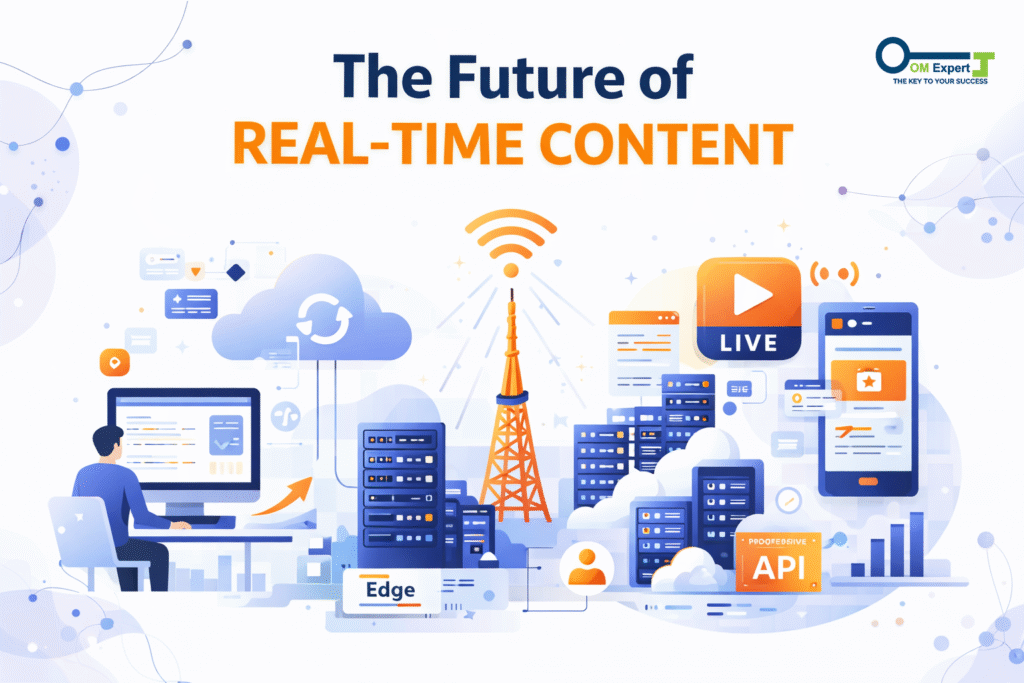
Fast delivery matters. Cloud-based content delivery systems distribute data across global networks to reduce delay. Some companies also use edge computing content delivery, which processes data closer to the user’s physical location. This reduces loading time even further.
Through API-driven content, different systems communicate quickly and exchange information. This supports advanced features in real-time web applications and improves the functionality of Progressive web apps’ content. For live events and broadcasts, live content streaming ensures instant updates without interruption.
The Business Value of Real-Time Content: -
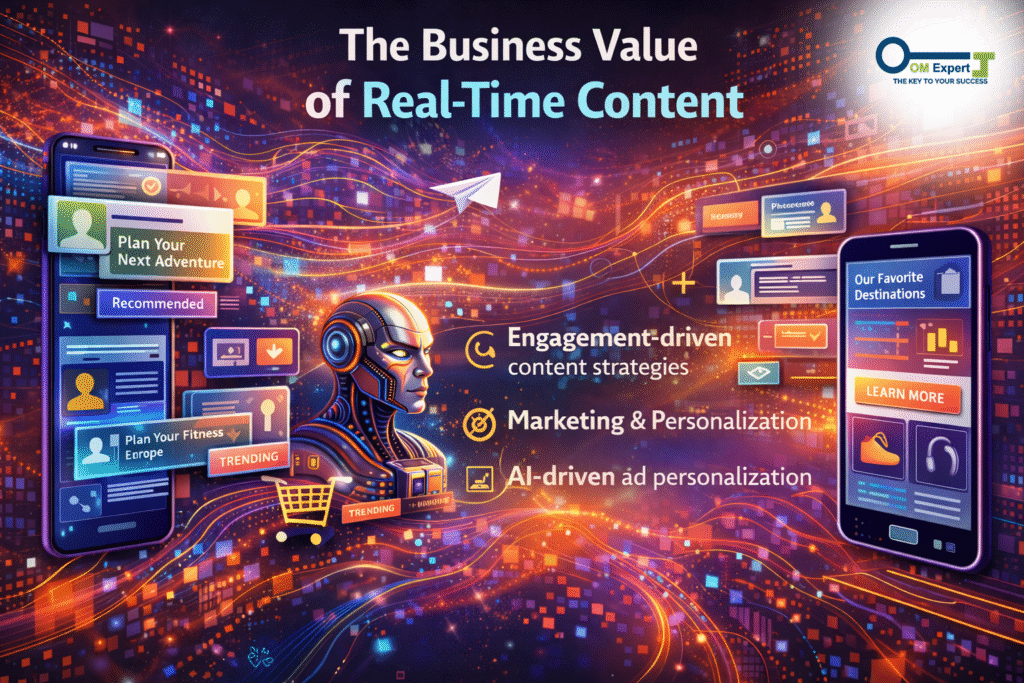
Why does this matter for companies? The answer is simple. Attention is limited. Competition is high. Relevance wins. Real-time strategies support engagement-driven content strategies by making every interaction meaningful. When users see content that matches their interests, they stay longer and trust the platform more.
Marketing and Personalization
Personalization is no longer optional. It is expected:
- Personalized marketing content increases customer loyalty.
- Targeted content recommendations guide users smoothly through their journey.
- Dynamic social media content adjusts posts based on trends and audience reactions.
Advertising also benefits. Through AI-driven ad personalization, ads become more relevant and less intrusive. Online stores use e-commerce content personalization to display products that match user preferences, improving sales performance.
Smarter Automation and Behavior Tracking
Modern systems rely on marketing automation content to trigger messages based on real actions. For example, when someone downloads a guide, they may receive follow-up information automatically.
This is powered by behavior-based content, which responds directly to user activity. By studying patterns through user behavior content analysis, businesses refine their strategies further. This leads to better decision-making and stronger results.
Real-Time Optimization and Performance: -
One of the biggest advantages of dynamic systems is continuous improvement. Content is not published and forgotten. It is tested, measured, and refined.
Analytics and Metrics
With content performance tracking, businesses monitor how users interact with pages. Through real-time analytics integration, insights are available instantly. Marketers can see which headlines perform better and adjust quickly. Real-time content metrics help measure engagement, bounce rate, and conversion rates without delay.
Testing and Improvements
Using A/B testing, real-time dynamic content generation, companies compare two versions of a page in real time. The better-performing version stays active. This process supports content optimization in real-time, improving outcomes continuously.
Systems also use clickstream-based content generation to understand user journeys. These insights shape future content decisions. All these efforts contribute to conversion-optimized content, designed to guide visitors toward meaningful actions.
Improving Customer Experience: -
Great digital experiences feel smooth, natural, and effortless. Users should not have to search hard for what they need. Real-time dynamic content generation systems help create this kind of seamless journey by adjusting content instantly based on behavior and preferences. When platforms respond quickly, the experience feels intelligent and user-friendly. Through customer experience personalization, visitors receive content that aligns with their interests, browsing history, and intent. This makes interactions more meaningful and reduces frustration. Instead of generic messages, users see information that feels relevant and timely.
Interfaces also improve with adaptive UX content, where layouts, buttons, and navigation elements adjust automatically to suit devices and user behavior. This ensures clarity, comfort, and easier decision-making. Businesses can further enhance engagement by using performance-based content updates to showcase trending products, popular articles, or limited-time offers. These updates are guided by broader data-driven content strategies, which rely on measurable insights instead of assumptions, leading to smarter decisions and stronger customer satisfaction.
Practical Examples Across Industries: -
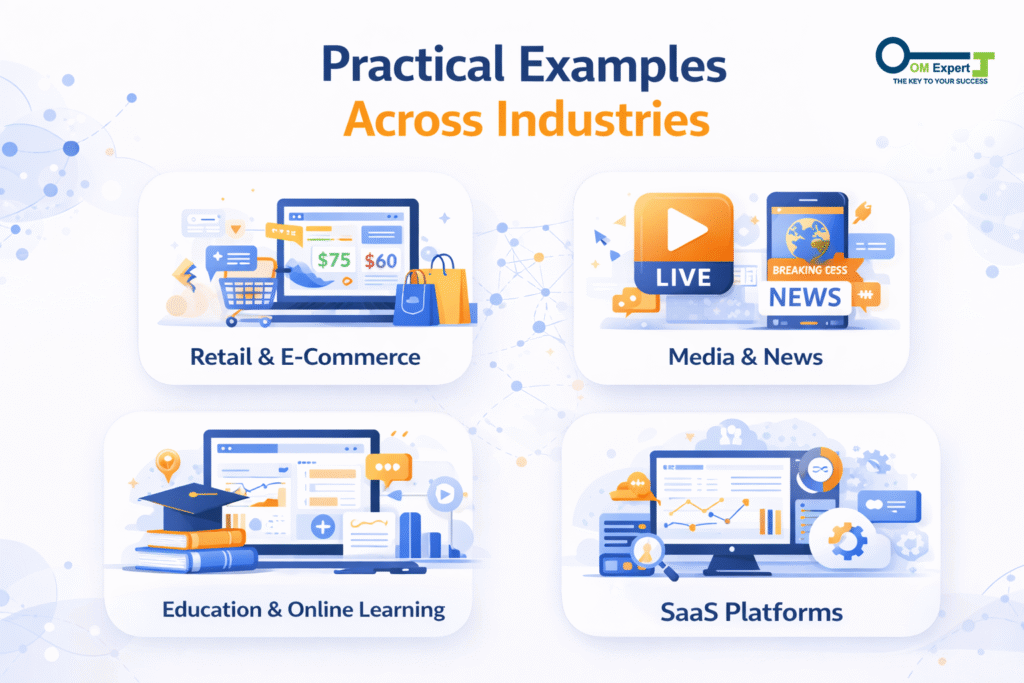
Retail and E-Commerce
Online retailers use dynamic systems to adjust product listings, prices, and offers instantly. This creates a shopping experience that feels customized and efficient.
Media and News
News platforms update headlines, trending topics, and breaking stories automatically. This keeps readers informed without refreshing the page.
Education and Online Learning
Learning platforms adjust course recommendations based on student progress. This makes digital education more engaging.
SaaS Platforms
Software dashboards display live performance indicators and data updates. These rely on real-time technology to maintain accuracy.
Challenges to Consider: -
Despite its benefits, real-time systems require careful management. Businesses must think beyond speed and focus on responsibility, stability, and long-term value. Key challenges include:
- Data privacy must be respected: Real-time platforms rely on collecting and analyzing user data. Companies must protect this information, follow legal regulations, and maintain transparency to build trust.
- Infrastructure costs can be high: Advanced servers, cloud networks, security systems, and technical expertise require ongoing investment to ensure fast and stable performance.
- Over-automation may reduce human creativity: While automation increases efficiency, relying too heavily on it can weaken originality and emotional connection in content.
- Strategic balance is essential: Businesses should combine technology with thoughtful planning. Automation should support clear goals, ethical standards, and meaningful user experiences rather than replace human judgment.
The Future of Real-Time Content: -
The future is clear. Digital platforms will become smarter, faster, and more responsive. Technology is moving at a speed that was hard to imagine just a few years ago. What once felt advanced quickly becomes normal, and what feels normal today may soon feel outdated. Real-time systems are becoming the new standard, not just an added feature.
As artificial intelligence continues to evolve, real-time systems will grow even more accurate and efficient. They will not only react to user behavior but also understand patterns, preferences, and intent with deeper clarity. Personalization will feel natural rather than forced. Instead of obvious recommendations, content will adjust smoothly in the background. Users may not even notice the technology working, but they will feel the difference through smoother experiences and more relevant information.
In the coming years, static websites may feel slow and disconnected. Users will expect instant updates, tailored messages, and seamless interaction across devices. Businesses that embrace adaptive strategies, invest in smart infrastructure, and focus on user-centered design will shape tomorrow’s digital landscape. Those who move early will not just follow trends; they will define them.
Conclusion
The future of digital communication belongs to systems that think fast and respond even faster. Real-time dynamic content generation is not just about technology; it is about understanding people better. When content adapts instantly to user needs, it feels natural, helpful, and relevant. That is what modern audiences expect. Businesses that use intelligent automation, live analytics, and personalized strategies can create stronger engagement and lasting connections.
Instead of guessing what works, they rely on data to guide every decision. This leads to better performance, improved customer satisfaction, and higher conversions. As competition grows online, standing still is not an option. Companies must move toward smarter, faster, and more adaptive digital experiences. With the right strategy and expertise, this shift becomes an opportunity rather than a challenge. OM Expert supports businesses in embracing advanced content strategies and building future-ready digital growth with confidence and clarity.
FAQs
1. What is real-time dynamic content generation?
It is the process of creating content that updates instantly based on user behavior or data. It delivers personalized experiences for every visitor.
2. How does real-time dynamic content benefit my website?
It boosts engagement by showing relevant content and increases conversions through personalized recommendations.
3. What technologies are used for real-time dynamic content generation?
Technologies include AI-content generation, machine learning, API driven content, cloud delivery, and edge computing.
4. Can small businesses use real-time dynamic content generation?
Yes, small businesses can use automated personalization and predictive content tools to enhance user experience.
5. How does real-time dynamic content improve marketing efforts?
It enables personalized campaigns, targeted recommendations, and behavior-based strategies for higher ROI.