
The Backbone of Smart Systems - How Structured data for AI assistants Drives Better Results
In today’s fast-moving digital world, data plays a very important role in making machines smarter. Among all types of data, structured data for AI assistants stands out as one of the most powerful elements behind intelligent systems.
When data is properly organized, AI systems can understand it easily, respond faster, and provide more accurate results. On the other hand, messy or unorganized data can create confusion for machines. This blog explains how structured data for AI assistants works, why it is important, and how it improves modern AI systems in a simple, clear way.
What is Structured Data for AI Assistants?
Structured data for AI assistants refers to data that is neatly organized in a defined format, like tables, databases, or labeled datasets. This format allows machines to easily read and process information. Unlike unstructured data, such as random text or images, structured data follows a fixed pattern, making it easy for AI to understand.
Structured vs Unstructured Data:
It’s important for AI creation to understand structured and unstructured data:
- Structured data is clean, organized, and easy to search
- Unstructured data includes text, images, audio, and videos without a fixed format
For example:
- A spreadsheet with customer details is structured
- A blog post or social media comment is unstructured
Structured data helps AI process information more efficiently.
Why Structured Data for AI Assistants is Important:
Using structured data for AI assistants significantly improves how AI systems learn, interpret information, and generate accurate responses. When data is organized in a consistent format, it becomes much easier for AI models to process and use it effectively in real-world applications.
Better Understanding
When data is well-structured, AI systems can easily recognize patterns, relationships, and categories within the information. This helps the AI understand context more accurately, for example, distinguishing between similar words, interpreting user intent, or connecting related pieces of information. Structured data reduces confusion and allows AI to see how different data points relate, leading to more meaningful and relevant responses.
Higher Accuracy
Clean, well-organized inputs help improve the accuracy of AI outputs. When data is structured, there is less ambiguity, fewer errors, and reduced chances of misinterpretation. This is one of the biggest advantages of structured data for AI assistants, as it ensures that responses are more reliable and consistent. High-quality structured data also helps AI systems learn better during training, resulting in improved performance over time.
Faster Processing
Structured data allows AI systems to process information much more quickly because the data is already organized in a predictable format. Instead of spending extra time interpreting messy or unorganized data, the AI can directly access and analyze the required information. This speed is especially important for real-time applications such as chatbots, voice assistants, recommendation systems, and automated customer support, where quick responses are essential for a good user experience.
Data Structure for AI Models:
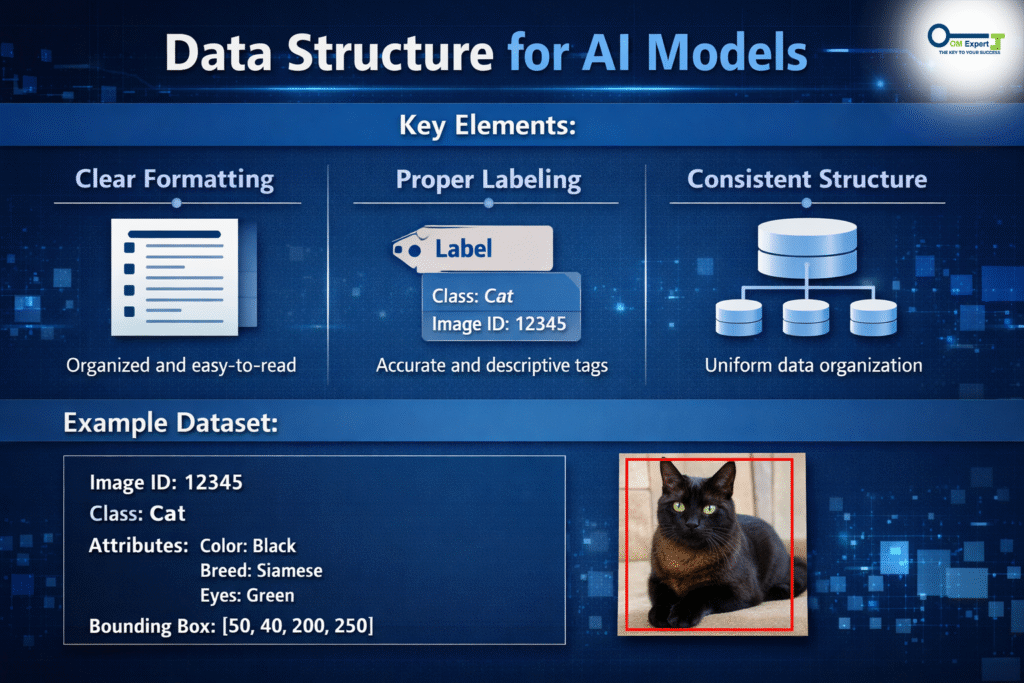
A strong data structure for AI models is essential for building reliable, scalable, and efficient AI systems. When data is properly structured, it becomes easier for models to learn patterns, make predictions, and generalize from training data.
Key Elements:
- Clear formatting
Data should follow a well-defined format, making it easy for AI systems to read and process. This includes consistent file formats, standardized units, and uniform data representation.
- Proper labeling
Accurate labels help AI models understand what each piece of data represents. This is especially important in supervised learning, where labeled data is used to train models to make correct predictions.
- Consistent structure
Data should follow the same structure across datasets. Consistency reduces confusion, prevents errors, and improves model performance.
When combined with structured data for AI assistants, these elements help machines learn faster, reduce training errors, and improve overall system reliability.
AI-Data Organization and Knowledge Representation:
AI-Data Organization
AI data organization refers to how data is stored, categorized, and managed to enable easy access and processing. Well-organized data improves system efficiency, reduces retrieval time, and ensures that AI models can quickly find the information they need.
Knowledge Representation in AI
Knowledge representation in AI is the method used to store information in a way that machines can understand and use. It allows AI systems to reason, make decisions, and solve problems by representing real-world knowledge in structured formats such as graphs, rules, or databases.
Role of Structured Data
Structured data for AI assistants plays a key role in knowledge representation by organizing information in a clear, logical way. This makes it easier for AI systems to interpret relationships between data points and apply knowledge effectively.
Semantic Data and NLP Structured Data:
Semantic Data for AI
Semantic data focuses on the meaning behind the data rather than just the raw words or values. It helps AI systems understand context, intent, and relationships between concepts, which leads to more accurate and human-like responses.
NLP Structured Data
NLP (Natural Language Processing) structured data is used in language-based AI systems to process and analyze human language. It helps with tasks such as text classification, sentiment analysis, language translation, and chatbot development.
Combined Impact
Together with structured data for AI assistants, semantic data and NLP structured data make AI systems more intelligent, context-aware, and capable of delivering more natural and user-friendly interactions.
AI Data Preprocessing and Data Labeling:
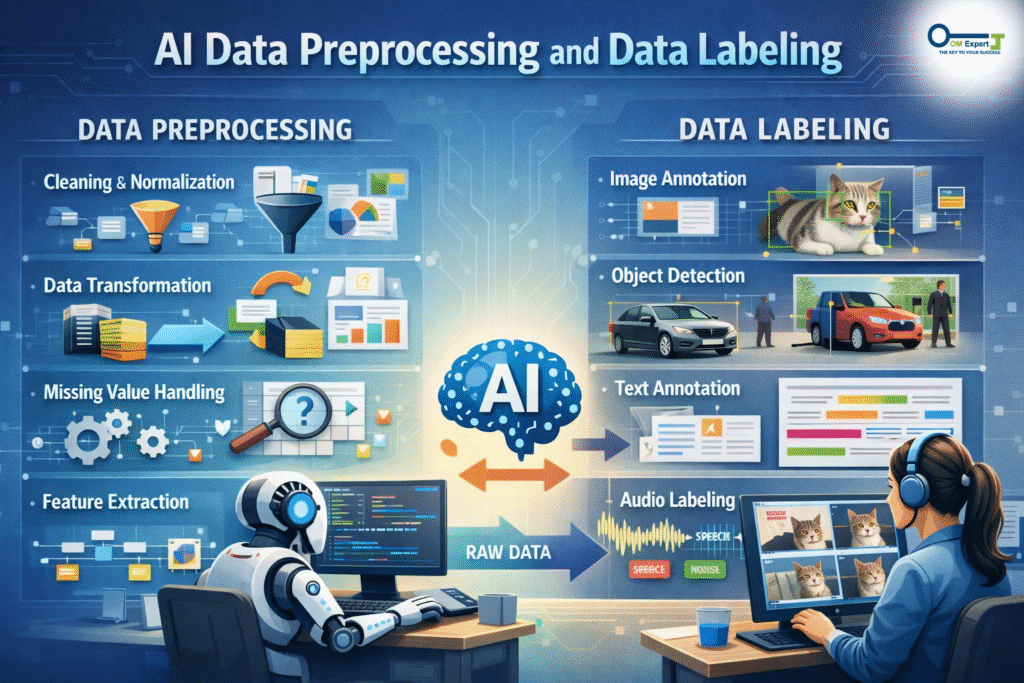
Data Preprocessing
Data preprocessing is the process of cleaning and preparing raw data before it is used in AI models. This includes removing noise, handling missing values, normalizing data, and transforming it into a usable format. Proper preprocessing improves model accuracy and performance.
AI Data Labeling
Data labeling involves assigning meaningful tags or categories to data so that AI models can learn from it. It is a crucial step in supervised learning.
For example:
- Labeling images
- Categorizing text
Labeling helps AI systems understand patterns and make correct predictions, making it a core part of structured data for AI assistants.
Structured Inputs and AI Response Optimization:
Structured Inputs
Structured inputs ensure that AI systems receive well-organized, consistent, and clearly defined data. This reduces ambiguity and helps AI models interpret input more efficiently.
AI Response Optimization
AI response optimization focuses on improving the quality, relevance, and speed of responses generated by AI systems. By optimizing how data is processed and interpreted, AI can produce more accurate and context-aware answers.
Using structured data for AI assistants enhances both input handling and output generation, resulting in faster, more precise, and more reliable AI responses.
AI Assistant Architecture and Context Awareness:
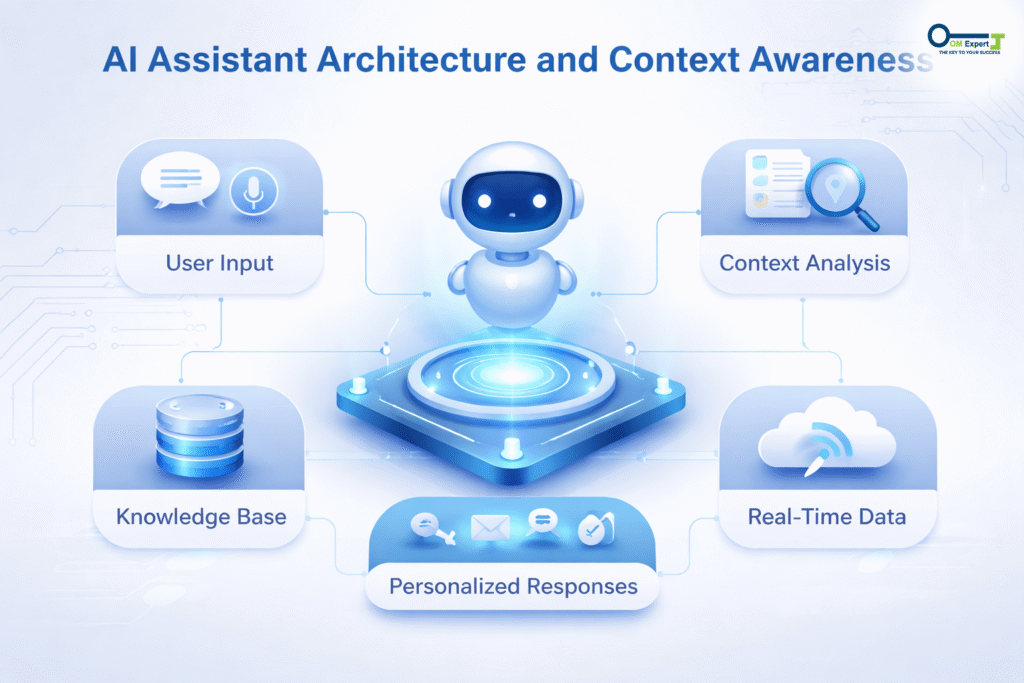
AI Assistant Architecture
AI assistant architecture refers to the overall design and structure of how an AI system is built and how its components interact. This includes data input layers, processing units, machine learning models, memory systems, and output generation. A well-designed architecture ensures that the AI assistant can handle tasks efficiently, scale properly, and deliver accurate results.
Context Aware AI Systems
Context-aware AI systems are designed to understand user intent, previous interactions, and situational context. This means the AI can remember past conversations, interpret follow-up questions, and respond more naturally.
This capability is made possible with structured data for AI assistants, which provides clear, organized, and meaningful inputs. With structured data, AI systems can connect past and present information, leading to more personalized and intelligent responses.
AI Data Pipelines and Scalable Architecture:
AI Data Pipelines
AI data pipelines are systems that manage the flow of data from collection to processing, transformation, and final output. These pipelines ensure that data moves smoothly through different stages such as ingestion, cleaning, labeling, training, and deployment.
Scalable AI Data Architecture
Scalable AI architecture allows systems to handle increasing amounts of data and user requests without performance degradation. As data grows, scalable systems can expand efficiently without needing major redesigns.
Structured data for AI assistants plays a major role in building efficient pipelines by ensuring that each stage receives clean, consistent, and well-organized data, which improves processing speed and reliability.
Enterprise AI Data Management:
Large organizations rely on advanced systems to manage vast amounts of data securely and efficiently. Proper data management ensures that information is organized, accessible, and protected.
Benefits:
- Better security – Structured systems make it easier to control access and protect sensitive information.
- Easy access – Organized data allows quick retrieval and efficient use across departments.
- Improved performance – Well-managed data reduces redundancy and speeds up the system.
Using structured data for AI assistants ensures consistency and reliability, which is essential for enterprise-level AI applications.
Structured Knowledge Systems and AI Data Frameworks:
Structured Knowledge Systems
Structured knowledge systems store information in a well-organized format, such as databases, knowledge graphs, or ontologies. This makes it easy for AI systems to retrieve and use information efficiently.
AI Data Frameworks
AI data frameworks provide a structured environment for collecting, processing, and managing data. These frameworks support workflows, data integration, and model training.
Structured data for AI assistants is the foundation of these systems because it ensures that all information is standardized, accessible, and easy to interpret.
Intelligent AI Systems and Organized Data:
Organized Data for AI
Organized data improves AI performance by reducing confusion, eliminating inconsistencies, and making data easier to process. When data is clean and structured, AI systems can operate more effectively and make fewer errors.
Intelligent AI Systems
Intelligent AI systems rely heavily on high-quality structured data to make decisions, learn patterns, and adapt to new information. These systems include chatbots, recommendation engines, and autonomous systems.
Without structured data for AI assistants, intelligent systems would struggle to interpret input correctly, leading to inaccurate or unreliable results.
Improving AI Accuracy with Structured Data:
One of the biggest advantages of structured data for AI assistants is improved accuracy. When data is well-organized and consistent, AI systems can make better predictions and provide more reliable outputs.
Key Benefits
- Better predictions – Structured data allows AI to identify patterns more accurately.
- Faster processing – Organized data reduces the time needed for interpretation.
- Improved decision-making – AI systems can analyze data more effectively and choose better outcomes.
This ensures that AI systems deliver consistent, high-quality results in various applications.
Improving AI Accuracy with Structured Data:
One of the biggest advantages of structured data for AI assistants is improved accuracy. When data is well-organized and consistent, AI systems can make better predictions and provide more reliable outputs.
Key Benefits
- Better predictions – Structured data allows AI to identify patterns more accurately.
- Faster processing – Organized data reduces the time needed for interpretation.
- Improved decision-making – AI systems can analyze data more effectively and choose better outcomes.
This ensures that AI systems deliver consistent, high-quality results in various applications.
AI-Data Modeling and Structured Information:
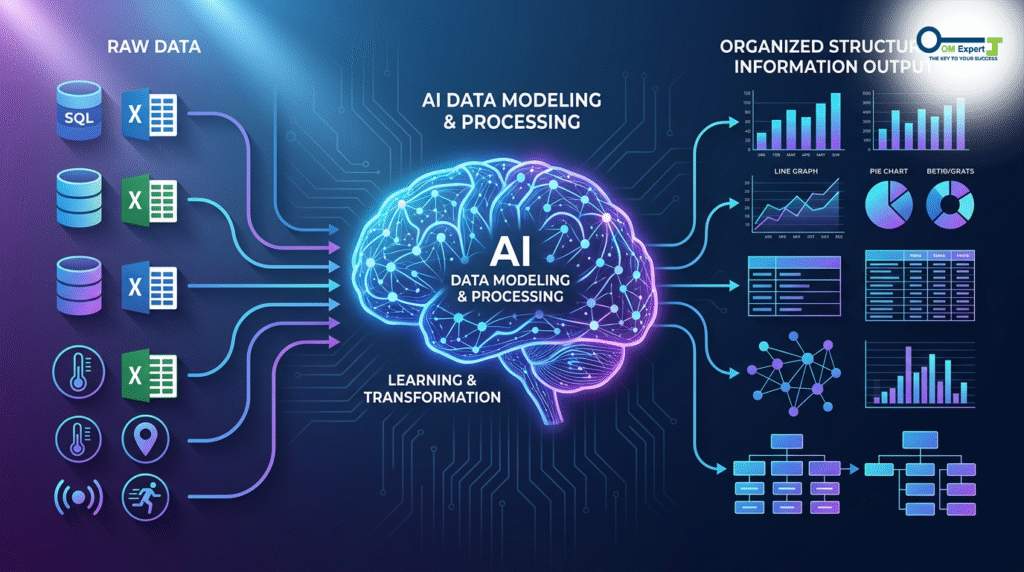
AI-Data Modeling
AI data modeling defines how data is structured, stored, and used within an AI system. It involves selecting appropriate data types, relationships, and formats to ensure efficient processing and learning.
Structured Information
Structured information refers to data that is organized in a consistent format, making it easy for machines to understand and use. This includes tables, databases, and labeled datasets.
Structured data for AI assistants is essential here because it ensures that AI systems can interpret and utilize information effectively during training and inference.
Efficient AI Data Handling:
Efficient data handling is crucial for maintaining system performance and reliability. Poor data handling can lead to delays, errors, and inefficiencies.
Best Practices
- Clean data storage – Remove duplicates and irrelevant information to maintain quality.
- Regular updates – Keep data current to ensure accurate results.
- Proper pipelines – Use well-designed workflows to manage data movement and processing.
These practices work best when combined with structured data for AI assistants, as they ensure smooth, consistent, and efficient data operations.
AI Training Data Structure:
A strong training data structure is essential for building accurate and reliable AI models. The quality and organization of training data directly affect how well the model learns.
Why It Matters:
- Better learning – Structured data helps models learn patterns more effectively.
- Fewer errors – Clean and labeled data reduces mistakes during training.
- Strong performance – Well-structured datasets lead to better generalization and real-world performance.
High-quality training data for AI assistants always depends on structured data, making it a critical component of any AI system.
Conclusion
In conclusion, structured data for AI assistants is the backbone of modern artificial intelligence systems. It helps machines understand, learn, and respond more efficiently and accurately. From improving AI performance to building intelligent systems, structured data plays a crucial role in every step.
Without it, AI systems cannot reach their full potential. For businesses looking to enhance their digital presence and adopt smarter strategies, platforms like OM Expert can help create better outcomes through advanced digital solutions.