How Semantic Search Optimization Can Transform Your SEO Strategy
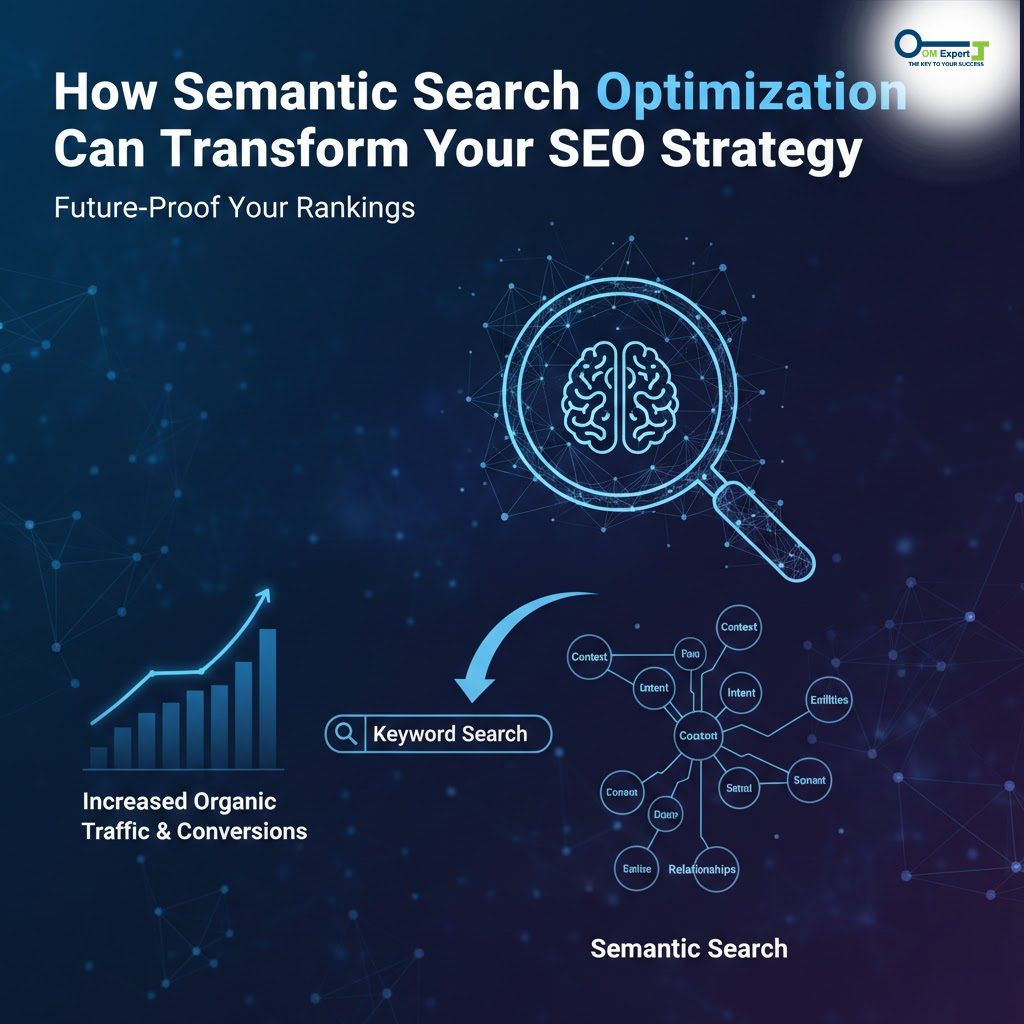
The modern digital landscape has transformed search engines from just matching keywords with web pages to understanding users’ intentions and thus delivering more meaningful and relevant results. This has made the Semantic search optimization an important part of an efficient SEO strategy. Companies can gain visibility, get the right people to their sites & stay ahead of competitors by focusing on the context & meaning of the words rather than just dealing with exact matches.
Understanding Semantic Search
Semantic search is a method that allows search engines to find out not only the intent but also the contextual meaning of the words in a search query. Traditional keyword-based SEO, on the other hand, which focuses on matching exact phrases, leads semantic search to take user intent, context and related concepts into account, among others. This approach of search engines results in more accurate results corresponding to what the user really wants.
For example, if a person searches for the best places to visit in Paris, semantic search would help the search engine to realize that the user is probably looking for attractions, restaurants and things to do and not just any mentions of Paris in unconnected texts. Through Semantic Search Optimization, the companies will be able to make their content more likely to meet the needs of such subtle inquiries.
Key Components of Semantic Search Optimization
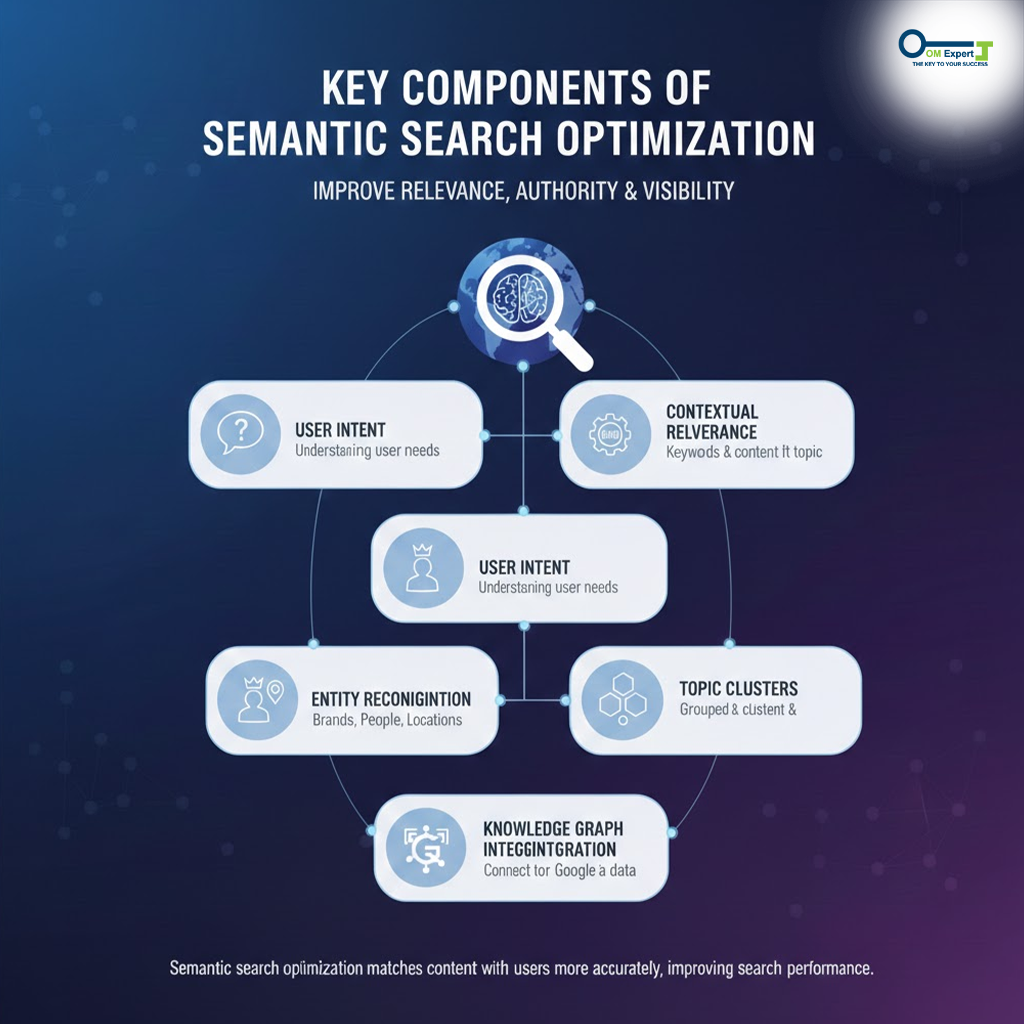
It is important to understand the main components to use semantic search effectively. Semantic search checks user queries & matches them with relevant material. Implementing these elements helps improve relevance, authority & visibility in search results.
User Intent
Understanding what the user wants to achieve with their search helps tailor content that matches their needs.
Contextual Relevance
Ensuring keywords and content fit the topic and query context helps search engines understand your pages.
Entity Recognition
Including recognizable entities like brands, people & locations builds authority and shows search engines your content is trustworthy.
Topic Clusters
Grouping content around a central topic with related subtopics makes your site easier to navigate and signals full coverage.
Knowledge Graph Integration
Connecting content with Google’s knowledge graph can increase credibility & increase visibility in search results.
Semantic search optimization allows search engines to match content with users more accurately. These components make your pages more relevant & helpful while improving search performance.
Why Semantic Search Optimization Matters
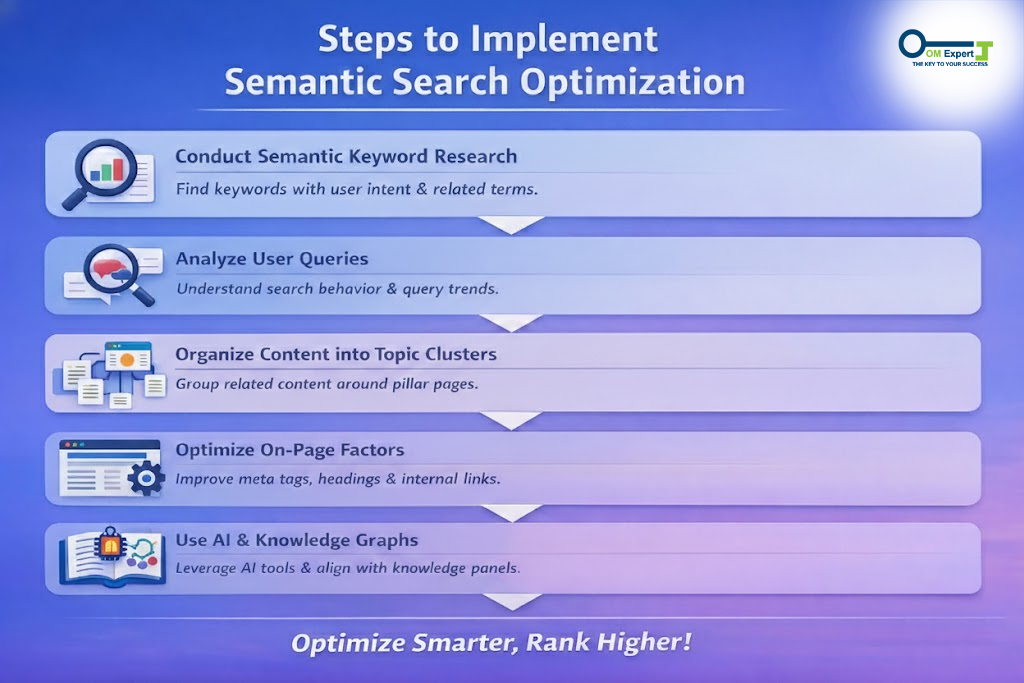
The implementation of a semantic search optimization strategy requires a well-thought-out approach. This is how it is to be done right from the start.
Conduct Semantic Keyword Research
Start by identifying keywords that reflect user intent rather than just volume. Use tools that offer insights into related concepts, questions & entities. Focus on topic modeling to cluster related keywords & phrases, ensuring your content covers the broader topic completely.
Analyze User Queries
Examine the search queries your audience is using. Consider the context, location, device type & even search patterns. Understanding search behavior is difficult for crafting content that meets user expectations. Tools that check query trends can help identify content gaps and opportunities for optimization.
Organize Content into Topic Clusters
A topic cluster approach groups related content around a focused pillar page. It will be considered by search engines as being fully covered by your site when a topic is structured in this way. To illustrate, a pillar page on Semantic search optimization could have links to subpages discussing LSI keywords, content gaps, and knowledge graph integration.
Optimize On-Page Factors
Traditional on-page optimization yet has its place, whereas semantic SEO unplugs the simple keywords. It includes all headings, meta descriptions, image alt text & internal links. Naturally, incorporate question keywords and long-tail variations to respond to the most common user queries. The coming together of these makes your content more discoverable and relevant in SERPs.
Focus on Content Quality and Context
Semantic search prioritizes content that thoroughly addresses a topic. Ensure your content provides in-depth explanations, examples and actionable advice. Use contextual SEO techniques to clarify relationships between concepts, making it easier for search engines to interpret your content’s meaning.
Using AI and Knowledge Graphs
The tools that use AI for semantic SEO can analyze content gaps, recommend more entities and optimize to the searcher’s intentions. The possibility of being included in the rich results, when your content is in harmony with Google’s knowledge panel or knowledge graph, which can greatly increase traffic and visibility, is improved.
Monitor and Adjust
Semantic search is dynamic. Track performance using analytics tools to see how your content performs across different queries. Update your content to fill gaps, add new related topics and refine your strategy based on algorithm updates and user behavior.
Best Ways for Semantic Search Optimization
There is more than just keywords to focus on if you want to get the most out of semantic search optimization. Consider these best ways to maximize the benefits of semantic SEO
Use Related Keywords Strategically
Using LSI keywords and their synonyms properly in your content is beneficial to the quality of your content and the chances of being included in more search queries, as it leads to more search queries being semantically rich through this method.
Focus on Comprehensive Coverage
Cover all relevant subtopics in your content to establish authority. For example, a post on Semantic search optimization could include sections on topic clusters, entity-based SEO, search intent and AI-driven optimization.
Prioritize User Experience
Semantic SEO is not just about algorithms; it’s about providing value to users. Ensure your content is easy to read, visually appealing and structured logically. Incorporate lists, headings and subheadings to improve readability and engagement.
Include Contextual Internal Links
Link to related content within your website to help search engines understand the relationship between topics. This approach supports the overall topic authority and improves user navigation.
Answer Questions Directly
Incorporate question keywords & provide clear answers. This strategy increases the visibility of your content being featured in rich snippets, which can drive more traffic.
Stay Updated on SEO Trends
Checking algorithm updates, new SEO tools & changing search behavior. Incorporating AI-powered semantic SEO techniques can secure a place in the competition in the ever-changing SEO landscape.
Common Mistakes to Avoid
Even with semantic search optimization, certain mistakes can undermine your efforts.
- Keyword stuffing: Heavy usage of keywords, which affects readability in content, can work against its SEO performance.
- Ignoring user intent: Focusing only on search volume without considering intent can reduce engagement.
- Neglecting content structure: Badly arranged content can result in difficulty for both users and the search engine in understanding a site.
- Skipping analytics: Improving monitoring tasks can help identify gaps, refining strategy along the way.
You can create a more effective Semantic search optimization strategy by avoiding these pitfalls, which benefits both users and search engines.
Tools to Support Semantic Search Optimization
There are many tools that can really make the process of applying semantic SEO easier and, at the same time, help to ensure that your strategy is effective and all-encompassing. Tool selection permits you to evaluate content, spot missing sections and enhance for both relevance and cordiality.
- SEO Semantic Analysis Tools: The functions of these tools consist of spotting associated keywords, phrases and entities that have a contextual relationship with your main topic. Uncovering the semantics of relationships between terms allows one to generate content that is user-query-friendly and boosts the overall relevance of the content in the search results.
- Topic Modeling Software:Topic modeling tools help in clustering your content around the main ideas. This not only assures the comprehensive coverage of a subject by your website but also helps to communicate to the search engines that your site is the main source of information on that particular topic by not having the subject covered in scattered parts.
- Content Audit Platforms: The platforms do the analysis of the current content to find gaps, obsolete information, and pages that are not getting much traffic. One can make changes in the semantic SEO strategy and that too in a better way if one understands what specific content is lacking or needs to be improved and thus meet the users’ intentions and increase the amount of organic traffic as a result.
- AI-Driven Optimization Tools: AI tools can be insight providers through analyzing user intent, behavior & semantic relevance. They recommend alterations for content structure, keyword combination and entity addition, thus aligning your pages with search engines’ most valued characteristics.
- Knowledge Graph analyzers: The tools make sure that your content is in line with the acknowledged entities, concepts, and relationships found in Google’s knowledge graph. When done properly, the integration will greatly increase your likelihood of being displayed in rich results, knowledge panels, and other enhanced SERP features, which concurrently will boost your visibility and credibility.
Using these tools strategically can help you make your semantic SEO work easier and more efficient.
Conclusion
The SEO semantic also promotes marketers to think of the whole content strategies, thus leaving behind the practice of targeting keywords in isolation and going for a comprehensive topic coverage instead. This method does not just guarantee better rankings but also contributes towards gaining more trust, participation & loyalty of the users.
The application of semantic search optimization in SEO strategy has gone from optional to mandatory. It is essential for long-term success. By knowing the user’s needs, using topic clusters, integrating AI tools and focusing on the quality of content, companies can win the race for online visibility, customer engagement & improved search engine rankings in a competitive online landscape. For those who want to advance their SEO efforts, these strategies, a call to OM Expert for expert guidance and resources, can be the stepping stone to success with the necessary tools and insights.
FAQs
1. What is Semantic Search Optimization?
It’s the process of optimizing content for context, intent, and topic relevance instead of only keywords.
2. How is semantic SEO different from traditional SEO?
Traditional SEO targets keywords. Semantic SEO targets meaning, intent, and topics.
3. Does semantic SEO replace keywords?
No. It uses keywords smartly along with related terms, topics, and entities.
4. What are topic clusters in semantic SEO?
They are groups of related content built around one main topic to build authority.
5. How does user intent affect rankings?
When your content matches what users actually want, Google rewards it with better visibility.
6. Can semantic SEO improve organic traffic?
Yes. It helps your content rank for more relevant and long-tail searches.